About 3 years ago, I wrote a post about Apple's iPhone 5C and its potentially hidden business proposition for the company. At the time the debut of the iPhone 5C was perplexing given that it was essentially an all-around inferior product to Apple's newest flagship, the iPhone 5S, and even lesser compared to the previous iPhone 5. Pundits and critics everywhere reasoned that Apple may have overplayed its hand in being so explicit in its targeting of the emerging markets - in particular China, as supposedly the "c" represented that country.
Fast forward 3 years and it looks like these critics were right: Apple has never again released a product like the iPhone 5c. It looks like a failure that the company is eager to move on from and forget. But as I conjectured back in 2013, the iPhone 5c likely had a hidden value proposition of making its superior cousin more attractive in the eyes of the consumer. In other words, Apple may not have cared about how many units of the iPhone 5c it sold or even if the product made a profit at all. Because its main purpose was create a perception that the iPhone 5S was of better value and convince potential customers to buy it instead. In behavioral economic theory, this is known as "relativity" - the human tendency to compare products against one another. Unlike Android or even Windows Phone, there are no other companies other than Apple making iPhones; therefore Apple has to take it upon themselves to create this sense of relativity, that the iPhone 5S is a truly amazing device.
So how does this all relate to the title of this blog post? Without rehashing what all the tech blogs and news outlets have reported, Google earlier today announced 2 new phones under the names of the Pixel and Pixel XL. This marks Google's first official foray into the lucrative smartphone business - since they never marketed a phone under the name "Google" while owning Motorola. On paper, both smartphones are very capable devices with some unique distinctive advantages compared to the competition. They have fast processors, good screens, and brilliant software. But akin to the reception of the iPhone 5c, it seems like everyone is criticizing Google for its pricing structure of starting at $649 for the lowest model. Essentially, the criticism is that Google is taking a page out of Apple's iPhone playbook by creating a direct competitor. And that it'll inevitably fail because no one can play Apple's game besides Apple itself.
But once again, my hypothesis is that Google's true intention isn't to sell the Pixel phones for profit or even break even point. I don't think they even care for how many units it sells ultimately. The real business reason is, rather, to reinvigorate the Android market and challenge the other manufacturers to stay on top of the game. The comparative example is arguably Microsoft's Surface business. Microsoft essentially created a new market by themselves in the 2-in-1 segment of tablets, to the extent that it's now a staple in every PC manufacturer's marketing brochure and even copied by Apple into their iPad Pro product. Likewise the Google Pixel phones are meant to motivate and inspire the Android manufacturers, especially towards the upper end of the market in pricing and features. We'll see if this is a true or false hypothesis.
Showing posts with label apple. Show all posts
Showing posts with label apple. Show all posts
Tuesday, October 4, 2016

Thursday, September 25, 2014
Thoughts on Apple Pay
I'm feeling very bullish on Apple these days. Despite the #bendgate controversy that began a few days ago, they've done a tremendous job with the unveiling of not only 2 versions of iPhone 6 but also the Apple Watch. I like them so much that I upped my holdings in its stock this morning.
The star of the show, in my opinion, was none of the gadgets Tim Cook revealed during the past 9.09.14 event. Sure the iPhone 6 is snazzy, loaded with the latest processors, camera technology, and even the bigger displays. It's bound to sell millions upon millions -- especially bringing back users who migrated to other platforms for bigger displays. The Apple Watch will also be a huge hit, mainly for its tight integration in Apple's ecosystem and as a fashion accessory. But both of these are just gadgets at the end of the day. The real star was: Apple Pay.
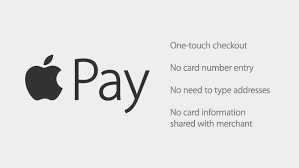
As a tech enthusiast, I've heard about mobile payments before and even have Google Wallet installed previously. But never before has a company with Apple's leverage entered such as space and it's bound to revolutionize the way we think and use mobile payments going forward. Want to know how much leverage Apple has? A good example is looking at the emails sent out by banks and credit card companies to announce their support for Apple Pay. Every single one of mine have sent me emails to profess their love and support. That is absolutely staggering. Not many companies are able to pull off Day 1 third-part support the way Apple has done it here. Rumors are transaction costs are bound to decrease as Apple Pay is supposedly more secure than other means.
More importantly however, is the ease of use. For the first time last week, I used the Starbucks app installed on my Android phone to pay for a couple cups of coffee at Starbucks. Nothing extraordinary about this event except for that it was: (1) my first time ever doing such a transaction, and (2) surprised by how easy and seamless it was. The latter in particular stood out as I returned the following day to do the same, with same results. I swear that the experience (not the coffee) was so good that I felt more attached and loyal to Starbucks. Yet Apple Pay promises to be even more seamless as you no longer would have to go through the motions of unlocking your phone screen and opening an app to pay the transaction -- if Apple's demo holds true, all you have to do is hold your finger to the fingerprint scanner for a second and pay the payment receiver with your phone. Voila! Takes about a second or two, and the transaction is completed.
Overall, I think the changes Apple Pay will usher in are two. On one hand, people will purchase more things and use their phones to pay more frequently due to how easy and seamless the process is. No longer do you have to take out your wallet (after finding it first), pick out the card you want, swipe it, enter your zip code, and (oftentimes) signing the receipt for the cashier. All you'd have to do with Apple Pay is pull out your phone, hold, tap, and done. It's that simple. The second change will be what I mentioned before -- strangely enough, I felt more attached to Starbucks despite McDonalds being my preferred coffee venue (disclaimer: coffee is a commodity to me, so the cheapest vendor gets my business). But likewise I can see myself going to shops and restaurants that accept Apple Pay more than those that do not. What you'll see then, is a domino effect of stores and restaurants scrambling after one another to install NFC-payment receivers for Apple Pay and other forms of mobile payment (e.g. Google Wallet).
Now, everything is not all rosy as Apple Pay has just been introduced and the public hasn't really been using mobile payments. But Apple does a heck of a job marketing its products and features, so I expect people to catch on quickly. The iPhone 6 will eventually give way to future generations and the same goes for Apple Watch. But Apple Pay as a platform is here to stay and it's going to be absolutely huge. I've put money in my mouth by investing significantly into Apple today, with a strong possibility to further increasing my holdings in the near future.
Oh and one more thing: Apple takes a cut out of every transaction made using Apple Pay.
The star of the show, in my opinion, was none of the gadgets Tim Cook revealed during the past 9.09.14 event. Sure the iPhone 6 is snazzy, loaded with the latest processors, camera technology, and even the bigger displays. It's bound to sell millions upon millions -- especially bringing back users who migrated to other platforms for bigger displays. The Apple Watch will also be a huge hit, mainly for its tight integration in Apple's ecosystem and as a fashion accessory. But both of these are just gadgets at the end of the day. The real star was: Apple Pay.
As a tech enthusiast, I've heard about mobile payments before and even have Google Wallet installed previously. But never before has a company with Apple's leverage entered such as space and it's bound to revolutionize the way we think and use mobile payments going forward. Want to know how much leverage Apple has? A good example is looking at the emails sent out by banks and credit card companies to announce their support for Apple Pay. Every single one of mine have sent me emails to profess their love and support. That is absolutely staggering. Not many companies are able to pull off Day 1 third-part support the way Apple has done it here. Rumors are transaction costs are bound to decrease as Apple Pay is supposedly more secure than other means.
More importantly however, is the ease of use. For the first time last week, I used the Starbucks app installed on my Android phone to pay for a couple cups of coffee at Starbucks. Nothing extraordinary about this event except for that it was: (1) my first time ever doing such a transaction, and (2) surprised by how easy and seamless it was. The latter in particular stood out as I returned the following day to do the same, with same results. I swear that the experience (not the coffee) was so good that I felt more attached and loyal to Starbucks. Yet Apple Pay promises to be even more seamless as you no longer would have to go through the motions of unlocking your phone screen and opening an app to pay the transaction -- if Apple's demo holds true, all you have to do is hold your finger to the fingerprint scanner for a second and pay the payment receiver with your phone. Voila! Takes about a second or two, and the transaction is completed.
Overall, I think the changes Apple Pay will usher in are two. On one hand, people will purchase more things and use their phones to pay more frequently due to how easy and seamless the process is. No longer do you have to take out your wallet (after finding it first), pick out the card you want, swipe it, enter your zip code, and (oftentimes) signing the receipt for the cashier. All you'd have to do with Apple Pay is pull out your phone, hold, tap, and done. It's that simple. The second change will be what I mentioned before -- strangely enough, I felt more attached to Starbucks despite McDonalds being my preferred coffee venue (disclaimer: coffee is a commodity to me, so the cheapest vendor gets my business). But likewise I can see myself going to shops and restaurants that accept Apple Pay more than those that do not. What you'll see then, is a domino effect of stores and restaurants scrambling after one another to install NFC-payment receivers for Apple Pay and other forms of mobile payment (e.g. Google Wallet).
Now, everything is not all rosy as Apple Pay has just been introduced and the public hasn't really been using mobile payments. But Apple does a heck of a job marketing its products and features, so I expect people to catch on quickly. The iPhone 6 will eventually give way to future generations and the same goes for Apple Watch. But Apple Pay as a platform is here to stay and it's going to be absolutely huge. I've put money in my mouth by investing significantly into Apple today, with a strong possibility to further increasing my holdings in the near future.
Oh and one more thing: Apple takes a cut out of every transaction made using Apple Pay.
Friday, October 4, 2013
iPhone 6: Expectations vs Reality
While I do not own any Apple devices and adamantly refuse to do so, I have a deep-seated interest on mobile technology and can't possibly ignore Apple's recent developments. (Return readers would probably notice the unusually high number of Apple-related posts I have written...). This interest is in part explained by the fact that Apple is in my stock portfolio. As a good friend recently said, "while I invest in Apple personally, you invest in Apple financially." All I can say is, Apple has been a solid investment so far.
But let us not detract from the purpose of this blog post, which is to provide commentary on the numerous rumors regarding the next iteration of Apple's popular iPhone device: the iPhone 6. As articles like this or this speculate, the iPhone 6 should be a major upgrade in both hardware and software. And therein lies the keyword: should. Amongst the many features these writers/bloggers are clamoring for, there are few very popular ones: (1) bigger display, (2) quad-core A8 processor, (3) NFC, (4) iOS8, (5) wireless charging, (6) element resistance, e.g. water, (7) better camera, and (8) eye-tracking. All of the aforementioned would be major enhancements to the iPhone, but I think if we're rational and review what Apple has done historically, only 1 or 2 of will actually be part of the iPhone 6 next year. In short, people need to be real and stop overhyping.
Historically speaking, the "S" iteration of every iPhone release sequence has included the biggest and most evolutionary changes to the device...at least on the hardware side. We've seen this most recently with the iPhone 5S -- with its superior camera, iOS 7, the M7 sensors and, arguably the most significant, the A7 SOC chip. The vastness of the 5S upgrade from the 5 is underscored by the folks over at AnAndtech labeling it, "quite possibly the biggest S-update we've ever seen from Apple." I'd have to agree, especially remembering that the biggest update from the 4 to 4S was the inclusion of Siri. So in other words, history has shown us that Apple tends to save its biggest "under-the-hood" updates to the iPhone for the "S" iteration.
With this in mind, I believe we can start debunking some of the wild rumors flying around. Let's go back to our original list of 8 and do a brief breakdown of each:
1. Bigger display -- Certain
The screen on my Samsung Galaxy S2 is still bigger than that of the iPhone 5S. Think about that for a moment. Apple is missing out a large part of the market by being fixated on a single screen side, and my best guess is that they will increase the size screen a further .5 inches to 4.5 inches. This should be the sweet spot for Apple as it won't alienate the current customer base while appealing to potential customers with a fetish for bigger screen sizes. The bonus is that this strategy would further differentiate between the flagship and the "C" iteration, and consequently sell more of the flagship device.
2. Quad-core A8 processor -- Likely, but...
...the performance update will be incremental at best. Think in terms of higher frequencies all around, rather than more physical cores per CPU and GPU. The A7 SOC already performs against the best other manufacturers like Intel and Qualcomm have to offer, and ushered in the 64-bit era to ARM chipsets. Apple might double the number of CPU cores to 4, but will certainly retain the quad-core GPU configuration. The potential for performance gain will fall on software developers to take advantage of the new architecture, rather than from the hardware side.
3. NFC -- No
Apple is proud of its proprietary technology and I don't see them deviating from their current stance, unless NFC is somehow recognized as the de-facto contact-less payment and file transfer systems.
4. iOS 8 -- Likely
The 7th version came out only six months after the 6th version, and I can see Apple continuing this trend. While the hardware on the iPhones is difficult to topple, it's another story on the software side. Android and, to a lesser extent, WP8 platforms have been on the forefront of innovations and iOS at this point comes off as an also-ran. It might be a big change too, considering the newer processing power available and Tim Cook's boast of "desktop-level" performance.
5. Wireless charging -- No
Just like the NFC above, Apple is into its own proprietary technologies and not about following others.
6. Element resistance -- Unlikely
Aside from the usual resistance to fingerprints and scratches, Apple is not going to risk their profit margin on a feature that few customers will ultimately find useful. There's also an ascetic factor that can't be overlooked.
7. Better camera -- Likely
As good as the improvements to the iPhone 5S' camera, the resolution remains a mediocre 8 megapixels. An upgrade to 13 megapixels would be straightforward and bring Apple even to its other competitors -- all except Nokia's ridiculous 41 megapixel sensor.
8. Eye-tracking -- No
Just as Siri was cool but ultimately is proving to be relatively useless, eye-tracking is a gimmicky technology that customers are impressed by but won't be a deciding factor.
I'll add that I do also foresee the increase of the memory (RAM) from 1GB to 2GB for the iPhone 6 (before being doubled again to 4GB for 6S). This would be a no-brainer given the new 64-bit architecture now powering the iPhones.
Sunday, December 16, 2012
Review: Acer Iconia W510 Tablet
After considerable complaints, anger, and time, I finally receive the Acer Iconia tablet that I previously ordered from the Microsoft Store online. I found it sitting outside my front door on Thursday night, again without requiring any signature or other security permissions. Maybe the delivery guy just decided that the hassle wasn't worth it (as I had already file claims for missing package). Anyway, at this point I'm glad I received the tablet at last. I've decided to write a brief review of the device since there doesn't appear to be any reviews for it anywhere.
To save time and space for this review, I'm assuming that you know the basics of a tablet and, in particular, the specifications for this Acer Iconia W510. My version is the 32GB one, sans the additional keyboard attachment -- in addition to 2GB of RAM and full version of Windows 8. Other specifications can be found here and here.
Contents of the packaging box were as follows:
Design
After opening the packaging, I was immediately impressed by the size, weight, and look of the tablet. The W510 is wider and narrower than a standard iPad, but also slightly lighter. The construction material is plastic, but of a studier type and dual-toned with a "white-on-metallic silver" look. It neither looked nor felt cheap -- although perhaps also not a premium feel like the iPad. With respect to weight, it was comfortable to feel on one hand at around 1.2 lbs.
Connectivity is where the Acer W510 shines: 1 micro-USB port, 1 mini-HDMI port, a proprietary charging/connector, and microsd card slot. The inclusion of the micro-USB to USB connector makes it very easy to plug any USB devices to the tablet. In addition, the microsd card slot enables one to cheaply double the system memory to 64GB with a 32GB microsd card. Internally, there is also Bluetooth and NFC (WiFi should be assumed, and here it is the N-type variety).
Display
The Gorilla-glass covered 10.1 inch screen has a standard resolution of 1366 x 768, which I believe gives it a dpi measure of around 150 (don't quote me on this though). To the average eye, it's a good-looking screen with a high level of brightness. Compared to a third generation iPad however, it clearly is not as sharp nor high-detailed. But I think for general purposes like reading documents and surfing the internet, the W510's display is more than adequate. At very least, it doesn't appear that Acer cheapened out on the display.
For touchscreen devices like tablets, the display is more than just for looks -- it has to perform too. After considerable time spent with it, I can happily say that the touch-sensitivity is good. I didn't experience any lag or glaring inaccuracies whether selecting or swiping on the device. The only issue I saw was when drawing on it using Sketchbook Express -- I had to keep my strokes slow as otherwise there would be skipping.
Performance
The Acer W510 is powered by Intel's new Clovertrail dual-core processor (Z2760) with its complementary video graphics cores, in addition to 2GB of RAM. Although the consensus from benchmarks out there indicate sluggish performance for the Z2760, it seemed adequate for everyday tasks from my usage. I experienced minimal lag while using a variety of apps on the Windows 8 "Metro-UI", even after having 7 apps concurrently open. The only indication of the Z2760's dearth in processing power came when operating in the "desktop" mode. But even in this latter case, it was not as glaring as feared.
The power consumption of the W510 is impressive. I was easily able to hit the 9-hour estimated battery life through a combination of app usage, video-watching, and internet browsing. Although real-world's usage may be lower than 9 hours, my experience with the device means it shouldn't deviate too much. More impressive was the fast-charging times for the device -- it took about an hour to charge 50% of of the battery.
For those interested, the overall Windows Index score for the Acer W510 was 3.4 -- with the lowest denominator being the CPU measure. The graphics was around 3.5 and the hard drive was unsurprisingly an outlier: 5.9 due to the flash-based memory.
Software
Although I use Windows everyday, using the Acer W510 was my first experience using the Windows 8 operating system. In short, it's a mixed bag. The bad news is that even for a veteran Windows user like myself, there was a considerable learning curve -- especially with the Metro-UI. For example, there are a variety of swipe-motion gestures that one has to learn to become acclimated: one has to swipe from the top of the tablet quickly to the bottom to close an app, or swiping from the left to open the so-called "app drawer" of all open apps. In addition, the absence the classic "Start" button from the desktop mode was an inexcusable mistake made by Microsoft. This made it very hard to use the desktop mode without digging through a few layers of files. Last but not least, there is clearly a lack of available apps at the moment -- the irony of posting a picture of the tablet onto my Facebook page when there is no official Facebook app available was not lost on me.
The good news is that, as previously mentioned, performance is very good when sticking to the Metro-UI "Start Menu". Apps install quickly and are quick to open. I've become a huge fan of the native Windows 8 apps like "Finance", "Travel", and "People" as the close integration into the whole OS feels very natural -- and useful. For example, articles on "Finance" are already presented in tablet-friendly format when you click on them.
Verdict
Overall, I really liked the Acer Iconia W510 -- particularly for the sale price I ordered it at $399. Even for the current price of $499, it is a good buy for all the things you get: a full-fledged Windows 8 OS, lots of connectivity options, and great build quality. You even have an option to enhance the experience by purchasing a matching keyboard plus battery dock that essentially converts the tablet into a laptop (or netbook).
At the end of the day, this device is what you make of it. If you are looking for a powerful device from which to run Microsoft Excel and perform video encoding, then this is definitely not what you are looking for. It simply does not have the graphics nor processing power. But, if you are an average user curious about the Windows 8 OS and a tablet capable of running your legacy Windows software, then you can't go wrong with this tablet. It does so much for so little a price. While its performance resembles that of a netbook (the Intel Z2760 benchmarks closely against an Intel Core 2 Duo), that comparison is unfair as it is a tablet competitively priced against the Microsoft Surface and the Apple iPad. Without a doubt, I would spend $499 on the Acer W510.
To save time and space for this review, I'm assuming that you know the basics of a tablet and, in particular, the specifications for this Acer Iconia W510. My version is the 32GB one, sans the additional keyboard attachment -- in addition to 2GB of RAM and full version of Windows 8. Other specifications can be found here and here.
Contents of the packaging box were as follows:
- W510 tablet
- micro-USB to USB connector
- charging cable (proprietary)
- Instructions manual
- Backup DVD
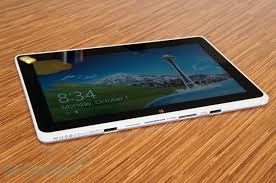
The Acer Iconia W510 (image courtesy of Engadget)
Design
After opening the packaging, I was immediately impressed by the size, weight, and look of the tablet. The W510 is wider and narrower than a standard iPad, but also slightly lighter. The construction material is plastic, but of a studier type and dual-toned with a "white-on-metallic silver" look. It neither looked nor felt cheap -- although perhaps also not a premium feel like the iPad. With respect to weight, it was comfortable to feel on one hand at around 1.2 lbs.
Connectivity is where the Acer W510 shines: 1 micro-USB port, 1 mini-HDMI port, a proprietary charging/connector, and microsd card slot. The inclusion of the micro-USB to USB connector makes it very easy to plug any USB devices to the tablet. In addition, the microsd card slot enables one to cheaply double the system memory to 64GB with a 32GB microsd card. Internally, there is also Bluetooth and NFC (WiFi should be assumed, and here it is the N-type variety).
Display
The Gorilla-glass covered 10.1 inch screen has a standard resolution of 1366 x 768, which I believe gives it a dpi measure of around 150 (don't quote me on this though). To the average eye, it's a good-looking screen with a high level of brightness. Compared to a third generation iPad however, it clearly is not as sharp nor high-detailed. But I think for general purposes like reading documents and surfing the internet, the W510's display is more than adequate. At very least, it doesn't appear that Acer cheapened out on the display.
For touchscreen devices like tablets, the display is more than just for looks -- it has to perform too. After considerable time spent with it, I can happily say that the touch-sensitivity is good. I didn't experience any lag or glaring inaccuracies whether selecting or swiping on the device. The only issue I saw was when drawing on it using Sketchbook Express -- I had to keep my strokes slow as otherwise there would be skipping.
Performance
The Acer W510 is powered by Intel's new Clovertrail dual-core processor (Z2760) with its complementary video graphics cores, in addition to 2GB of RAM. Although the consensus from benchmarks out there indicate sluggish performance for the Z2760, it seemed adequate for everyday tasks from my usage. I experienced minimal lag while using a variety of apps on the Windows 8 "Metro-UI", even after having 7 apps concurrently open. The only indication of the Z2760's dearth in processing power came when operating in the "desktop" mode. But even in this latter case, it was not as glaring as feared.
The power consumption of the W510 is impressive. I was easily able to hit the 9-hour estimated battery life through a combination of app usage, video-watching, and internet browsing. Although real-world's usage may be lower than 9 hours, my experience with the device means it shouldn't deviate too much. More impressive was the fast-charging times for the device -- it took about an hour to charge 50% of of the battery.
For those interested, the overall Windows Index score for the Acer W510 was 3.4 -- with the lowest denominator being the CPU measure. The graphics was around 3.5 and the hard drive was unsurprisingly an outlier: 5.9 due to the flash-based memory.
Software
Although I use Windows everyday, using the Acer W510 was my first experience using the Windows 8 operating system. In short, it's a mixed bag. The bad news is that even for a veteran Windows user like myself, there was a considerable learning curve -- especially with the Metro-UI. For example, there are a variety of swipe-motion gestures that one has to learn to become acclimated: one has to swipe from the top of the tablet quickly to the bottom to close an app, or swiping from the left to open the so-called "app drawer" of all open apps. In addition, the absence the classic "Start" button from the desktop mode was an inexcusable mistake made by Microsoft. This made it very hard to use the desktop mode without digging through a few layers of files. Last but not least, there is clearly a lack of available apps at the moment -- the irony of posting a picture of the tablet onto my Facebook page when there is no official Facebook app available was not lost on me.
The good news is that, as previously mentioned, performance is very good when sticking to the Metro-UI "Start Menu". Apps install quickly and are quick to open. I've become a huge fan of the native Windows 8 apps like "Finance", "Travel", and "People" as the close integration into the whole OS feels very natural -- and useful. For example, articles on "Finance" are already presented in tablet-friendly format when you click on them.
Verdict
Overall, I really liked the Acer Iconia W510 -- particularly for the sale price I ordered it at $399. Even for the current price of $499, it is a good buy for all the things you get: a full-fledged Windows 8 OS, lots of connectivity options, and great build quality. You even have an option to enhance the experience by purchasing a matching keyboard plus battery dock that essentially converts the tablet into a laptop (or netbook).
At the end of the day, this device is what you make of it. If you are looking for a powerful device from which to run Microsoft Excel and perform video encoding, then this is definitely not what you are looking for. It simply does not have the graphics nor processing power. But, if you are an average user curious about the Windows 8 OS and a tablet capable of running your legacy Windows software, then you can't go wrong with this tablet. It does so much for so little a price. While its performance resembles that of a netbook (the Intel Z2760 benchmarks closely against an Intel Core 2 Duo), that comparison is unfair as it is a tablet competitively priced against the Microsoft Surface and the Apple iPad. Without a doubt, I would spend $499 on the Acer W510.
Friday, July 29, 2011
iPhone 5 Spotted in the Wild?
I can be a hypocrite sometimes and this might be true in the case of Apple products. After slamming the company over the fanaticism of its customers (e.g. trading a kidney or going into debt for a iPad 2), I am starting to warm up to some of its products. While a Macbook is out of the question, I have already floated the idea of getting the iPad 3 when it arrives...in November 2011. Now I've just read about the soon-to-arrive iPhone 5 and thinking to myself, should I spring for it?

As reported by this article ("Appolicious"? what a horrible name!), an alleged iPhone 5 was caught in the wilderness of San Francisco yesterday. A tipster apparently caught sight of an iPhone model different from his own iPhone 4, snapped some pictures, alerted the website 9to5Mac, and the rumor mill exploded. Although the open secret has long been that the iPhone 5 will arrive in two months -- in the month of September-- Apple has managed to keep a close lid on its specifications. But here we have it, someone outside of the company has glimpsed the new iteration of the iPhone.
Unfortunately, not much useful information could be derived from the "leak", aside from a larger and curved screen. The tipster reported what he saw to have the screen size comparable to the HTC EVO (which has a 4.3 inch screen) and also "thinner" as well as "wider" than the current iPhone 4. None of these revelations are groundbreaking news -- there were already rumors (coming from component manufacturers) that screen size might be different this time, and Apple is known to obsess about thinning their devices.
But what makes this post interesting is my new openness to the iPhone 5. Because as you see, my birthday is in September and I am thinking of finally upgrading from my trusty Nokia e71x. As a tech geek, I have long been fascinated with getting a new phone and I'm getting sick of waiting of the newer and better devices. The biggest reason is the lack of competing products from others: Android devices suffer from lag due to non-native integration of the OS into the hardware, HP is being timid with webOS phones, Blackberries stink, and Windows Phone 7s are being slow to release. I am hoping to at least try the Nokia N9 though, before making a decision.
Tuesday, July 19, 2011
Apple 2011 Q3 Earnings
It's that time of the year! Companies, especially technology ones, are releasing their quarterly earnings statements. One of the most awaited ones in recent years has been Apple's and its Q3 2011 earnings do not disappoint at all (perhaps only for competitors).

Apple's Q3 2011 earnings are its best ever, with revenue totaling $28.57 billion -- of which $7.31 billion is profit. Not sure where this ranks the company in total revenue, but these figures have to Apple within the elites. A brief breakdown of the revenue sources reveal something we already known for a while: most of the revenue come from hardware sales. The Apple juggernaut sold 20.34 million iPhones, 9.25 million iPads, and 3.95 million Macs. These are extremely impressive figures, with which no other hardware manufacturer can compete against (especially when you factor in the diversity, e.g. Samsung/HTC may ship more phones, but nowhere near the number of tablets). Even the slight blip in the earnings statement was expected: a decrease of iPod Touches from 9.41 million to 7.54 million.
While I am no fan of its products, I am a fan of Apple's sheer business savvy-ness as measured by the loyalty of its massive customer base. The ecosystem Apple built, while decried (rightfully so) by critics for how closed it is, looks to be sustaining the company's revenue growth. Customers who are lured into a single Apple product will ultimately buy other Apple products too. Case in point: my roommate started off with an iMac, but now owns a MacBook, an iPhone, and an iPad.
Well done Apple, Jobs well done (couldn't resist). I may even break my self-imposed embargo on your products by buying the iPad 3...if you release it soon.
Tuesday, July 12, 2011
Apple iPad 3 Preview
[I'm going to try something new in this blog post. Instead of the usual commenting on reports from other technology-oriented blogs, I will try something more original...]
Nope, I do not have special insider information about Apple's imminent iPad 3. Nor do I have one on hand to tinker around -- and afterward write about my experiences with it. This post is simply to make calculated suggestions about the iPad 3.
Are you disappointed? Well, I frankly do not see a reason to be. Rumor mills on the iPad 3 have been running rampant lately, with all sorts of reports floating around about the expected arrival time or supply predictions. One point I am proving to you (as in, right now!) is that rumors are just that: rumors. The culture Steve Jobs has so carefully constructed at Apple means that no Apple employee is going to leak anything involving the device -- I doubt not even if you put a gun to their head. Unless a third-party outs something, or Apple itself releases information, the best information we have is just a series of calculated predictions.
And there should be nothing wrong about making calculated predictions, especially if they are made with an honest intent. This is precisely what I am about to do. Although I previously may have expressed interest in alternatives to Apple's now iconic product, there are still no viable alternatives. The Asus Transformer was arguably the strongest contender to the iPad 2, but it has gotten a negative rap about build quality and the immaturity of Google's Android Honeycomb OS. I am very curious to see what Amazon has in store nonetheless.
Here's the list of my calculated suggestions (most of which are no-brainers) for the iPad 3:
- Yes to "Retina" display -- Apple would be stupid not to do this. They need to implement the same display resolution used in the iPhone 4 into the iPad 3, if the goal remains to generate substantial revenue. Competitors are enhancing the resolution of their respective screens, and Apple can ill-afford to not follow suit in this increasingly competitive market.
- No to quad-core processor -- this one will not happen, because the technology is not there yet. Not enough time has passed to be able to integrate a quad-core processor successfully into the next iPad (they could but the cost would be too high). iPad 3 will retain the same A5 processor used in the iPad 2.
- Yes to 1GB+ of RAM -- one of the flaws of the iPad 2 was the pairing of a powerful processor with insufficient system memory. The result was the touting of amazing performance that could not be replicated in real life. Again, competitors are also pairing their devices with 1GB of memory.
- No to an "iPad Mini" -- Steve Jobs himself has declared the lack of a market for tablets with screen sizes below 10 inches. What else needs to be said? This one is pretty obvious, unless Apple plans to phase out the iPod Touch completely in favor of the iPad.
- No to lighter or smaller device -- there really isn't any point to doing this, in addition to the dangers of constraining the available space for circuitry boards. I believe we will see the iPad 3 have very similar dimensions and weight to the iPad 2.
- Yes to the same pricing scheme -- unless a quad-core A6 processor is integrated into the iPad 3, I see the prices for devices to remain the same. This means $499 for the smallest capacity iPad 3 (probably the same 16GB hard drive) and $599 for the next tier up.
- Yes to a late October arrival date -- Steve Jobs is too smart not to realize that if the release date is December or November, then there will be shortages and frustrated customers. If the release date is before late October, there is a great risk of cannibalizing the sales of the current iPad 2. In addition, this date allows Apple to compete directly with Amazon's alleged tablet.
So there you have it, a list of expected changes for Apple iPad 3. The keyword now is....patience.
Wednesday, June 15, 2011
iTunes Not a "Cash Cow" for Apple
This is certainly news to me. As reported by CNET, Apple is estimated to spend approximately $1.3 billion per year (that's $113 million per month) to run its iTunes and App Store portals. While that is a staggering operating expense, I always thought Apple makes many times that in revenues back. Looks like this may not be the case.

The cost estimation of $1.3 billion was computed by the market research firm Asymco, using the numbers provided at the most recent Worldwide Developers Conference, or WDC (quick recap here). Asymco concluded that given the price of songs and apps that Apple charges, the company runs both services at just "slightly above the breakeven point". This analysis is collaborated by the opinion of other analysts, who have stated in the past that the App Store has never been a source of huge profits for Apple. Piper Jaffray analyst Gene Munster estimated a year ago that the App Store only nets profits of $189 million since launch for Apple.
Now, how can this be? How could the two most popular music and application portals not contribute significantly to Apple's bottom line? I for one thought that their overwhelming usage alone (this is a no-brainer, as much as I like Amazon's stores, Apple's is just more popular) would translate into colossal profits. In wake of this news, it seems like the operating expenses are much higher than before. After all, the success of both services is contingent on Apple's ability to streamline payment processes, data transfers, and preparing capacity. All these can be expensive -- unlike Microsoft's cash cow "Office" or "Windows, or Google's ubiquitous search engine, Apple's iTunes and App Store require constant hands-on management. (Google probably has significant expenses to its search engine, but this is more than offset by advertising revenue.)
What is interesting about this news is that it points Apple's business model: maximize hardware revenue. While Apple's software may be adored by millions, new releases like OSX Lion and iOS5 are not for the express purpose of being innovative. Instead, they are to attract customers to its hardware like MacBooks and iPhones -- which (obviously) run exclusively on Apple's own hardware. The main point of software including App Store and iTunes is to differentiate Apple from the competition. This makes sense given the oft-ridiculous markup of Apple's various gadgets: because this is how the company makes the bulk of its profits. In economic speak, the profit margin is much much higher in hardware than in software. No wonder iTunes runs so sluggishly on my ThinkPad!
Wednesday, June 8, 2011
Apple WWDC 2011 Recap: iOS 5, OSX Lion, and iCloud
The title to this post is a bit misleading. Although I own no Apple products (as noted here), I consider it a responsibility to follow all tech-related news. Therefore I cannot in good faith consciously exclude Apple announcement. To such effect, I had to follow Apple's WWDC 2011. (I am a couple days behind, I know...)

Although Apple introduced a host of new products/changes like the iOS5 and OSX Lion, I think the picture reflects on the most important announcement of this conference. As expected, Apple revealed its competing service to the Pandora, Amazon's Cloud Player, and Google's Music (Beta). Nothing new needs to be said, other than just greater detail than what was predicted before. Music labels will be much happier with Apple's approach than the other two behemoths (Pandora is technically a "music recommendation" service). I foresee some nasty lawsuits in the future.
The other two major announcements (iOS 5 and OSX Lion), pardon my lack of enthusiasm, were very underwhelming. Nothing significant was really introduced -- simply a myriad of implications to improve user experiences. Fanboys left and right are either bashing or commending Apple for its approach. I am indifferent about both. The reason? My answer: why fix something that is not broken? In addition, the competition is not that strong anyway. For example, Android OS is more powerful but lacks the proper interface to make it popular; Windows Phone 7 is more intuitive but lacks the brand power and hardware support. On the OSX Lion front, everyone knows that OSX will always be a distant second to Microsoft's Windows OS. Even Apple knows this very well.
What's more interesting is how Apple is consolidating its gains in the marketplace. Namely, they are streamlining their entire ecosystem so that consumers are likelier to keep buying their products. This is very sound strategy. For example, once you have an iPhone, you'd likely buy a MacBook to synchronize with your new phone. Not only would this lessen the chance your customers will sample other products, it also breeds fanaticism. Power of Apple indeed.
Apple's New Spaceship Campus
I haven' been posting as frequently as I should -- "my bad". It's been a busy week looking for housing, especially now that I definitely have to move out by the end of this month. Apparently the person I was subleasing is not allowed to sublease to others and, as a result, he is getting evicted. This means we are also.
Personal quips aside, I just came across a fascinating report about Apple's upcoming plans for its new campus. Yahoo News reports that Steve Jobs himself made a pilgrimage to the City Council meeting in Cupertino (California) and revealed plans for a brand-new, state-of-the-art company headquarters. This is something to be expected. After all, Apple's sales revenue is growing by leaps and bounds -- along with its profitability.
BUT, what was not expected was the design of the this new headquarters building. As evident from below's image, it looks like....an ALIEN SPACESHIP!
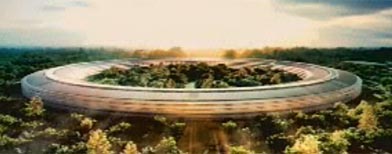
The proposed building will apparently be four stories high and house 12,000 employees. It is important to note that given Apple's current employee headcount of 2,800, they are expecting even more incredible growth for the foreseeable future. The actual location will be on the current Hewlett-Packard campus, near "Pruneridge Avenue and Wolfe Road" (whatever that is). It'll span 150 acres.
Putting aside the awesomeness (not to mention audacity) of the design, it's interesting to note that the middle of this disc-shaped building will be a courtyard. This complements Steve Job's alleged affinity for mother nature and zen-ish themes. The proposed plan will obviously be approved -- especially when Steve Jobs himself is making an appearance. Let's see how Microsoft and Google compete with that!
Monday, June 6, 2011
Time to Buy an Xbox 360 + Kinect?
This week is E3, which stands for "Electronic Entertainment Expo" or aka the annual gaming convention. Companies worldwide flock together to demonstrates their upcoming hardware, software, and games. It's a pretty exciting time for any gadget enthusiasts, especially if you are also a gamer. To sweeten the deal, Apple likes to schedule its annual WDDC (Worldwide Developers Conference) in the same week. Definitely much more exciting stuff than the recent (failure) of a Computex 2011.

To start things off, Microsoft went ahead and demonstrated upcoming changes to its Kinect motion-sensing controller. And boy did they hit a home run. Aside from a host of new exclusive games such as Gears of War 3, Mass Effect 3, Star Wars (doesn't everyone dream of dueling like a Jedi?), Microsoft also dramatically expanded its games offerings to the other audiences. The latter includes Sesame Street: Once Upon a Time and a Fun Labs that allows innovative uses of Kinect equipment, as well as the usual sports titles (Kinect Sports Season Two). I am personally thrilled to see the multiplayer capability of Dance Central 2, which before could only track the moments of only one player at a time. Now it can do at least two. It's time to learn some contemporary dance moves!
[It would be redundant to breakdown all the new offerings by Microsoft. You can check the Engadget articles here and here if you'd like. They have good photographs too!]
What I will do is provide a brief analysis of what these announcements mean to Microsoft. Obviously Microsoft is riding a wave of positive image right now -- Sony Playstation's reputation is smashed after its shutdown of its Playstation Network. I might even go out and purchase an Xbox (with Kinect of course) to take advantage of these new changes. Let's return to using our trusty bulleted formatting system to present some thoughts:
- Nintendo better reveal a solid successor plan to its Wii system, lest they want Xbox to also dominate them in sales. The Wii's novelty has worn off, especially now that with Kinect one no longer needs any controller. More alarmingly, Microsoft is bent on targeting a rounder demographic -- which has always been Nintendo's stronghold. Let's hope Nintendo's rumored "Wii HD" is competitive.
- Cable television providers also better watch out. As this initial revelation suggests, Microsoft is looking to expand its lineup of television offerings through the Xbox. I have friends who have already ditched cable television subscriptions for plans offered by Netflix and Hulu. Heck, even Netflix should be cautious as this new ability of the Kinect may pose a challenge to its business model.
- The emphasis on Kinect in this year's Microsoft E3 presentation hints that the next iteration of the Xbox will not be released for another 2 or 3 years at least. Microsoft is simply betting (with its development wallet) too much on Kinect to just forsake it after a year. Anyone holding out for the next iteration should just go ahead and buy the current one.
What does this mean to Microsoft's stocks? I'd recommend holding on as blogged about earlier. The pessimism is too heavy on the stock market right now. However, it doesn't mean you can't wait out the summer by buying yourself an Xbox 360 + Kinect (as I very well might).
Saturday, June 4, 2011
Apple to Unveil iCloud Service Soon
To maintain the momentum of Apple-related blog posts (which is weird since I am definitely not a fan of its products), I wanted to share some thoughts about Apple's upcoming iCloud music service. It definitely won't be revolutionary but, given Apple's clout in the music industry, the service should make a tremendous impact.
Cloud-based music streaming is not a new idea at all. Although Amazon's recent release of its Amazon Cloud Drive marks a new chapter in its prominence, these services have existed for years. For instance, the music-streaming service Pandora is essentially a cloud-based music streaming service. You can't store music on Pandora nor directly purchase the music, it allows you to listen to (ad-sponsored) music anywhere you have internet connection. Its 48 million-strong subscribers is certainly invitation for competitors to entry the market.

What makes Pandora's service unique is, as mentioned, its inability to store music, ad-placement, and indirect purchase of music. Pandora primarily serves as a "music recommendation" service that offers customized playlists -- very useful for those who want to sample new music. But Amazon's Cloud Player, on the other hand, works much more like a traditional cloud computing service. The same can be said of Google's Music Beta and (theoretically) Apple's iCloud service.
For these three aforementioned services, the subscriber is offered varying amounts of storage data on a computer cloud that allows easy access anywhere to the internet. Subscribers/users have to upload individual songs onto the cloud before being able to play it. So therein marks a vital difference between these services and Pandora -- user input is necessary before the service becomes usable (almost like the characteristic of social networks discussed previously).
But as this article from the Boston Globe describes, Apple's iCloud service may be somewhat different from Google's and Amazon's. More specifically, instead of users having to upload songs onto the cloud, Apple's iTunes services could search a user's music library and automatically link the song to what Apple already has stored in its servers. This way, Apple saves bandwidth and the user saves the hassle of having to upload music. Sounds like a win-win scenario...except this means having to strike deals with music labels. There are reports that Apple has already ponied up considerable royalties to four major music labels (Sony, Warner, EMI) for iCloud music rights.

Having used Amazon's Cloud Player, I can see how Apple's approach could be more popular with users. It took me almost an hour to upload 2 GBs of music! Furthermore, Amazon's cloud service is not very well integrated with its own music store -- which is a competitive advantage of Apple's, thanks to the ubiquitousness of its iTunes system. But we can't fault Amazon for its effort. Not only was it the first on the market (Pandora aside), it offers users 5GB of storage on its cloud drive that isn't limited to music. Amazon's approach to cloud-based streaming also made sense because it did not want the hassle nor the big royalties paid to the music labels.

All in all, cloud-based music streaming looks like it is here to stay. Advancement in data networks and in portable devices would only help their widespread usage. In the long term, I see Apple's iCloud service sharing the marketplace with Amazon's and Google's products. Amazon should be the bigger rival since it has its own music store already -- only problem is integration. Services like Pandora would become niche, targeting users who want to sample different music from what they already have.

Friday, June 3, 2011
Kidney for iPad 2 Trade? Yikes!
To make up for the lack of interesting news on technology products lately, I want to bring to light a very disturbing piece of news. Think about this question for a second -- how far would you do to acquire Apple's iPad 2? Stand in line for hours and days? Check. Buy it marked up on eBay and Craigslist? Check. Sell a kidney for it? Chec....wait....WHAT?!
Yes, it's true. As the LA Times reports, a Chinese teen has taken the craze for Apple products to new heights. The kid, known as "Zheng", sold one of his kidneys via the black market 20,000 yuan. He intentionally did this in order to buy an iPad 2 and also a computer. It wasn't hard for his mother to notice his new gadgets, nor the sizable scar across his hip. According to the police reports that inevitably followed, the organ transplant was not authorized and likely performed by some shady third-party.
While the boy is still young, it's hard to overlook the fact that he risked his life for some gadgets. The fact that he tried to hide his ordeal from his parents further worsens the case. He could have been abducted or killed, by traveling alone to some distant city to have this operation. Thankfully he was not scammed. But this doesn't lessen the "WTF moment" associated with what he did.
Looks like the rampant materialist culture I wrote about previously has spread across the Pacific. I am sincerely appalled.
Wednesday, May 18, 2011
Follow Up: Apple 10th Retail Anniversary
According to a new report from BGR, the planned Apple release to commemorate its 10th retail anniversary may be an integration of NFC payment systems into its iproduct line. What a bummer. I personally do not find this exciting at all...
...But it does hold major implications for the future of the iplatform, as well as the future of electronic transactions. Just as its Apps Store allowed developers from anywhere to submit applications, these NFC systems would theoretically allow electronic transactions to happen anywhere.
Want to pay for a Craigslist service/product with your credit card? Sure, if the seller has an i-enabled NFC system in place.
[Correction: looks like I misread the initial report from BGR. Whatever is going to be released to celebrate will not be done "tomorrow" (my mistake), nor tomorrow (as in Thursday), but probably this weekend sometime....somewhere.]
Tuesday, May 17, 2011
Apple Launching New Product Tomorrow?
Just read this article on Boy Genius Report (BGR) about Apple possibly releasing a new product tomorrow -- which apparently marks their 10th retail anniversary (aka since it first opened Apple Stores). The article itself lays out some interesting details about security measures taken to prepare for this sort of event.
So I guess the question is, what could this new product be? As always, let's run through the list of suspects and see...
1. iPhone 4GS -- originally billed as the iPhone 5, but the changes from the current iPhone 4 seems insufficient to warrant a numerical advancement. This revision will include the new A5 dual-core processor found on the iPad 2, along with software adjustments (new iOS?). I think this seems unlikely as the product launching tomorrow, because (1) it is scheduled for the fall release and (2) the white iPhone 4 just came out last month. Apple isn't stupid to cannibalize its sales.
2. iPad 3 -- despite the overwhelming demand, many people (including yours truly) were disappointed with the iPad 2's insufficient changes. The biggest issue was the screen; instead of upgrading to the iPhone 4-like pixel density, Apple opted to keep the original iPad screen. Poor camera resolution was another downer. Furthermore, competition has also been heating up like Asus' Transformer. Yet similar to #1 (iPhone 4GS), not much time has elapsed since the iPad 2 was released. Steve Jobs isn't the CEO if he lacked the strategic acumen.
3. next iPod -- this is definitely more plausible than the previous two but I just don't see it happening. iPod's function as discrete mp3 players has been surpassed by the current generation of smartphones, which package the mp3 player together with internet accessibility, etc. Again, too much potential for sales cannibalization for Apple to introduce a revamped iPod.
4. Software revisions (OSX Lion, and new iOS) -- Apple has been facing stiffer challenges on this front for a while, namely at the hands of Windows 7 and Android respectively. Android in particular has become Apple's Achilles heel, with increasing activations and growing popularity among users. A common complaint against iOS is its lack of customization and closed environment -- which I foresee Apple making the proper adjustments. Although this is much more likely than the previous 3, it seems a bit anti-climatic for Apple to just release software changes on its 10th retail anniversary. Keyword is retail.
5. ? -- I honestly do not have a clue.
The aforementioned speculations are just that: speculations. But unless Apple is planning a new product offering, whatever comes out tomorrow should be one of the above. I guess we will hold our collective breath and see...
Friday, March 11, 2011
iPad 2 Release Day
Long story short, my brother's birthday is coming up soon and I owe him a sizable gift. Originally I planned to buy him a new Xbox 360 with Kinect but, at my parents' (read: mom's) protest, this will probably now become an iPad 2. I personally dislike Apple products but my brother's a fan -- and it's his birthday after all.
Just read the following post on Engadget concerning people waiting outside in long lines for the iPad 2 (I still envy that brand power!). The post can be found here:
I refer to the post because I just read a hilarious comment made by a reader. Now, the recent tragedy in Japan (earthquake + tsunami) is no laughing matter and I fully express my condolences to all those affected. But the comment is simply hilarious:
Commenter 1: These guy deserved a tsunami more than Japan. Joy to the sight of iFans piling up together griping their iPads and looking for an apps to help them out. Do you have an apps for that?
Commenter 2: iSwim and iDrown. Unfortunately iSwim didn't want to let Apple take their 30% protection fee.
Wednesday, February 23, 2011
Power of Apple
[Let me preface this blog entry by admitting that I dislike products made by Apple Inc. A big part of the reason is probably because I have never owned any Apple products -- and have been proud of this streak. I was somewhat disappointed when I installed Apple iTunes on my computer for the first time...because Windows Media Player was failing me.]
Admissions of bias aside, I really admire Apple for its massively-profitable business. I am also grateful for its effect on the consumer electronics market, on both the software and the hardware fronts. This is especially true in the recent years. Cases in point: the iPhone and the iPad.
The former (iPhone) revolutionized the cell phones market -- widely perceived as the biggest "game changer" since the Motorola Razr phone of the early 2000s. Apple had numerous critics before the release of the iPhone and faced paranoia from its shareholders that the company was shifting away from its core business (in computers and software). Skeptics questioned whether Apple, a company with no prior experience in the cell phone market, could be successful in a very competitive industry. Moreover, it was about to compete with a completely new design of a cell phone: a multi-purpose device that was accessed primarily via the human touch (aka touchscreen). Cell phones until then had mostly been flip phones with tiny screens and limited to making and receiving phone calls.
The latter (iPad) received even more skepticism (read: ridicule), as just an upscaled version of the iPod Touch. Many people, me included, argued that there was no market for such a product. Even if there was a market, sales of the iPad would cannibalize those of the iPod Touch. In other words, it seemed like a losing preposition for Apple Inc. to go ahead and market this product.
Fast forward each described product a couple of years and we see that Apple not only proved its skeptics wrong, but has been enormously profitable. It has surpassed its rival Microsoft in market capitalization and still showing impressive growth. Reviewing Steve Jobs' leadership over the past decade, one can only be envious of Apple Inc. and its remarkable turnaround. A feel-good story for everyone but its competitors. The iPhone remains the hottest cell phone around, not due to its specifications but on the strength of its applications store (App Store) and its ease-of-use to most individuals. As for the iPad, it has proved to produce a similar effect on the market as its smaller brother. Namely, it has created a new market for tablet products and forced competitors to catchup its lead. There was no perceived market for the iPad because one could not anticipate how it would be used by businesses, consumers, schools, etc.
So what makes Apple so successful? It doesn't take a rocket scientist to point to Steve Jobs as the answer. Jobs has been visionary in his leadership of the company, a prophet able to foresee what products consumers want and able to profit off that future vision. But I applaud Jobs not for his visions -- because other CEOs in the past have been able to have streaks of developing wildly popular products. Instead, I applaud his solidarity and strong sense of self-identity to see through his convictions. He appears to be above the typical CEO: always worried about his/her job security and how to best increase shareholder value. Jobs seems to be separate to accomplish the latter without the former preoccupation. Critics may laugh at his standard attire of turtleneck shirt, jeans, and New Balance sneakers but cannot deny his success.
But I'd argue that Jobs is not central to Apple's success (he is instrumental in building this though). The keystone to Apple's success is brand equity, one unparalleled in the corporate world. Apple's brand recognition is superior to any of its competitors -- not even Google, Sony, and Coca-Cola can compete against it. How do I know this? The fanaticism of Apple consumers can be laughed off as the pinnacle of materialism but, oh boy, would I give anything to have that type of brand loyalty. These "Apple fans" are often loyal to the fault (to themselves, not to the company). They consider any products made by Apple as the must-have item and trust completely in its superiority. Therein lies the key: Apple products are often not the most advanced nor the most consumer-friendly (and they are downright expensive), but consumers trust in the quality of Apple's products and in their value without a second thought. The company's marketing may be polarizing ("I'm a Mac and I'm a PC", anyone?) but it is extremely effective at distinguishing Apple from its competitors. The marketing also serves to build upon this perception that Apple product-owners are trendy and always have the coolest electronics.
From a behavioral economics perspective, Apple is successful because it has no competitors for its products. There may be substitutes such as Windows and the Motorola Xoom, but these are imperfect substitutes at best. Apple builds its own software and hardware, both of which cannot be licensed. To the consumer, the lack of substitutes means they have nothing to compare Apple products to and thus unable to judge their prices nor their capabilities effectively. This in economics jargon, is known as "price anchoring". Because consumers do not have price anchors with which to compare, they are at the initiative of Apple to dictate the value and the capabilities of its products. For example, $500 is an enormous cost for the iPad: a tablet without multitasking capabilities nor the ability for office productivity. One can purchase a netbook for half the cost of an iPad. The iPad is largely used to play games, surf the internet, and watch movies -- all of which a netbook can do. But the iPad offers some differences from a netbook (e.g. touchscreen) -- differences significant enough to leave consumers at a loss about how to perceive its value. It should be worth about the price of a netbook but, given the uncertainty, it makes it easy for Apple to double the price without losing the double amount of potential customers. One can even argue that Apple wants to price its products relatively high due to the association with the "premium quality".
Aside from Steve Jobs and brand equity, Apple also has other things that most people may not consider. I read an article recently describing the effectiveness of customer service at Apple Stores, and a perceived generosity of Apple's protection plans. Apple customer helpers are apparently very willing to help anyone in need with a single caveat --as long as the product in question is an Apple product. When and where the product was purchased does not matter. The tenaciousness (read: helpfulness) of the helpers also creates a positive impression for customers. (I recall the article's example of a photographer coming to the store to complain about his MacBook's deficiencies and walking out very happy with a newer model...that he just purchased himself). So, Apple's customer service is often underrated. Another underrated area is Apple's control over its distribution channels and the ability to lock up inventory and suppliers. Its tight control over the suppliers is indicated by the rare leaks about its upcoming products and the lack of shortages over its products. Both of these effects have additional ramifications (of course).
Since the introduction of the iPod, Apple has gravitated away from a focus on devices with linear capabilities and into devices considered to be "jack-of-all trades, master of none". The beauty lies in the responsiveness of the populace to the latter. It seems people do not care much for the quality of a capability but their quantity. Makes sense in a way: would you rather carry three gadgets with specialized functions, or a single device that can do all three but maybe not as well? I think that unless you are an expert photographer or music professional (what is the probability? About one percent?), then you'd take the latter in a heartbeat. Slap on the that Apple brand and it's a OMGWTFBBQ moment for many.
Subscribe to:
Posts (Atom)