About 3 years ago, I wrote a post about Apple's iPhone 5C and its potentially hidden business proposition for the company. At the time the debut of the iPhone 5C was perplexing given that it was essentially an all-around inferior product to Apple's newest flagship, the iPhone 5S, and even lesser compared to the previous iPhone 5. Pundits and critics everywhere reasoned that Apple may have overplayed its hand in being so explicit in its targeting of the emerging markets - in particular China, as supposedly the "c" represented that country.
Fast forward 3 years and it looks like these critics were right: Apple has never again released a product like the iPhone 5c. It looks like a failure that the company is eager to move on from and forget. But as I conjectured back in 2013, the iPhone 5c likely had a hidden value proposition of making its superior cousin more attractive in the eyes of the consumer. In other words, Apple may not have cared about how many units of the iPhone 5c it sold or even if the product made a profit at all. Because its main purpose was create a perception that the iPhone 5S was of better value and convince potential customers to buy it instead. In behavioral economic theory, this is known as "relativity" - the human tendency to compare products against one another. Unlike Android or even Windows Phone, there are no other companies other than Apple making iPhones; therefore Apple has to take it upon themselves to create this sense of relativity, that the iPhone 5S is a truly amazing device.
So how does this all relate to the title of this blog post? Without rehashing what all the tech blogs and news outlets have reported, Google earlier today announced 2 new phones under the names of the Pixel and Pixel XL. This marks Google's first official foray into the lucrative smartphone business - since they never marketed a phone under the name "Google" while owning Motorola. On paper, both smartphones are very capable devices with some unique distinctive advantages compared to the competition. They have fast processors, good screens, and brilliant software. But akin to the reception of the iPhone 5c, it seems like everyone is criticizing Google for its pricing structure of starting at $649 for the lowest model. Essentially, the criticism is that Google is taking a page out of Apple's iPhone playbook by creating a direct competitor. And that it'll inevitably fail because no one can play Apple's game besides Apple itself.
But once again, my hypothesis is that Google's true intention isn't to sell the Pixel phones for profit or even break even point. I don't think they even care for how many units it sells ultimately. The real business reason is, rather, to reinvigorate the Android market and challenge the other manufacturers to stay on top of the game. The comparative example is arguably Microsoft's Surface business. Microsoft essentially created a new market by themselves in the 2-in-1 segment of tablets, to the extent that it's now a staple in every PC manufacturer's marketing brochure and even copied by Apple into their iPad Pro product. Likewise the Google Pixel phones are meant to motivate and inspire the Android manufacturers, especially towards the upper end of the market in pricing and features. We'll see if this is a true or false hypothesis.
Showing posts with label economics. Show all posts
Showing posts with label economics. Show all posts
Tuesday, October 4, 2016

Thursday, September 25, 2014
Thoughts on Apple Pay
I'm feeling very bullish on Apple these days. Despite the #bendgate controversy that began a few days ago, they've done a tremendous job with the unveiling of not only 2 versions of iPhone 6 but also the Apple Watch. I like them so much that I upped my holdings in its stock this morning.
The star of the show, in my opinion, was none of the gadgets Tim Cook revealed during the past 9.09.14 event. Sure the iPhone 6 is snazzy, loaded with the latest processors, camera technology, and even the bigger displays. It's bound to sell millions upon millions -- especially bringing back users who migrated to other platforms for bigger displays. The Apple Watch will also be a huge hit, mainly for its tight integration in Apple's ecosystem and as a fashion accessory. But both of these are just gadgets at the end of the day. The real star was: Apple Pay.
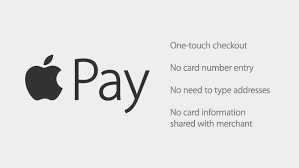
As a tech enthusiast, I've heard about mobile payments before and even have Google Wallet installed previously. But never before has a company with Apple's leverage entered such as space and it's bound to revolutionize the way we think and use mobile payments going forward. Want to know how much leverage Apple has? A good example is looking at the emails sent out by banks and credit card companies to announce their support for Apple Pay. Every single one of mine have sent me emails to profess their love and support. That is absolutely staggering. Not many companies are able to pull off Day 1 third-part support the way Apple has done it here. Rumors are transaction costs are bound to decrease as Apple Pay is supposedly more secure than other means.
More importantly however, is the ease of use. For the first time last week, I used the Starbucks app installed on my Android phone to pay for a couple cups of coffee at Starbucks. Nothing extraordinary about this event except for that it was: (1) my first time ever doing such a transaction, and (2) surprised by how easy and seamless it was. The latter in particular stood out as I returned the following day to do the same, with same results. I swear that the experience (not the coffee) was so good that I felt more attached and loyal to Starbucks. Yet Apple Pay promises to be even more seamless as you no longer would have to go through the motions of unlocking your phone screen and opening an app to pay the transaction -- if Apple's demo holds true, all you have to do is hold your finger to the fingerprint scanner for a second and pay the payment receiver with your phone. Voila! Takes about a second or two, and the transaction is completed.
Overall, I think the changes Apple Pay will usher in are two. On one hand, people will purchase more things and use their phones to pay more frequently due to how easy and seamless the process is. No longer do you have to take out your wallet (after finding it first), pick out the card you want, swipe it, enter your zip code, and (oftentimes) signing the receipt for the cashier. All you'd have to do with Apple Pay is pull out your phone, hold, tap, and done. It's that simple. The second change will be what I mentioned before -- strangely enough, I felt more attached to Starbucks despite McDonalds being my preferred coffee venue (disclaimer: coffee is a commodity to me, so the cheapest vendor gets my business). But likewise I can see myself going to shops and restaurants that accept Apple Pay more than those that do not. What you'll see then, is a domino effect of stores and restaurants scrambling after one another to install NFC-payment receivers for Apple Pay and other forms of mobile payment (e.g. Google Wallet).
Now, everything is not all rosy as Apple Pay has just been introduced and the public hasn't really been using mobile payments. But Apple does a heck of a job marketing its products and features, so I expect people to catch on quickly. The iPhone 6 will eventually give way to future generations and the same goes for Apple Watch. But Apple Pay as a platform is here to stay and it's going to be absolutely huge. I've put money in my mouth by investing significantly into Apple today, with a strong possibility to further increasing my holdings in the near future.
Oh and one more thing: Apple takes a cut out of every transaction made using Apple Pay.
The star of the show, in my opinion, was none of the gadgets Tim Cook revealed during the past 9.09.14 event. Sure the iPhone 6 is snazzy, loaded with the latest processors, camera technology, and even the bigger displays. It's bound to sell millions upon millions -- especially bringing back users who migrated to other platforms for bigger displays. The Apple Watch will also be a huge hit, mainly for its tight integration in Apple's ecosystem and as a fashion accessory. But both of these are just gadgets at the end of the day. The real star was: Apple Pay.
As a tech enthusiast, I've heard about mobile payments before and even have Google Wallet installed previously. But never before has a company with Apple's leverage entered such as space and it's bound to revolutionize the way we think and use mobile payments going forward. Want to know how much leverage Apple has? A good example is looking at the emails sent out by banks and credit card companies to announce their support for Apple Pay. Every single one of mine have sent me emails to profess their love and support. That is absolutely staggering. Not many companies are able to pull off Day 1 third-part support the way Apple has done it here. Rumors are transaction costs are bound to decrease as Apple Pay is supposedly more secure than other means.
More importantly however, is the ease of use. For the first time last week, I used the Starbucks app installed on my Android phone to pay for a couple cups of coffee at Starbucks. Nothing extraordinary about this event except for that it was: (1) my first time ever doing such a transaction, and (2) surprised by how easy and seamless it was. The latter in particular stood out as I returned the following day to do the same, with same results. I swear that the experience (not the coffee) was so good that I felt more attached and loyal to Starbucks. Yet Apple Pay promises to be even more seamless as you no longer would have to go through the motions of unlocking your phone screen and opening an app to pay the transaction -- if Apple's demo holds true, all you have to do is hold your finger to the fingerprint scanner for a second and pay the payment receiver with your phone. Voila! Takes about a second or two, and the transaction is completed.
Overall, I think the changes Apple Pay will usher in are two. On one hand, people will purchase more things and use their phones to pay more frequently due to how easy and seamless the process is. No longer do you have to take out your wallet (after finding it first), pick out the card you want, swipe it, enter your zip code, and (oftentimes) signing the receipt for the cashier. All you'd have to do with Apple Pay is pull out your phone, hold, tap, and done. It's that simple. The second change will be what I mentioned before -- strangely enough, I felt more attached to Starbucks despite McDonalds being my preferred coffee venue (disclaimer: coffee is a commodity to me, so the cheapest vendor gets my business). But likewise I can see myself going to shops and restaurants that accept Apple Pay more than those that do not. What you'll see then, is a domino effect of stores and restaurants scrambling after one another to install NFC-payment receivers for Apple Pay and other forms of mobile payment (e.g. Google Wallet).
Now, everything is not all rosy as Apple Pay has just been introduced and the public hasn't really been using mobile payments. But Apple does a heck of a job marketing its products and features, so I expect people to catch on quickly. The iPhone 6 will eventually give way to future generations and the same goes for Apple Watch. But Apple Pay as a platform is here to stay and it's going to be absolutely huge. I've put money in my mouth by investing significantly into Apple today, with a strong possibility to further increasing my holdings in the near future.
Oh and one more thing: Apple takes a cut out of every transaction made using Apple Pay.
Monday, September 23, 2013
Economics of Apple's iPhone 5C
As the whole world is probably aware of it now, Apple's newest generation of iPhone was released last Friday and quickly sold out across many countries. This morning, the company reported a staggering 9 million units sold of both the 5C and 5S flavors. Very impressive for any company but, especially for Apple, it demonstrates that despite all the competition from Google's Android platform, its own iOS and iPhone devices still command a massive following.
What's interesting about all this is the attention and ridicule at Apple's decision to release a cheaper companion to their flagship iPhone. For the current (seventh?) generation, this means the iPhone 5C. The general opinion was that without a cheaper version of the flagship iPhone, Apple would be surrendering a significant portion of the market to Android handset makers like HTC and Samsung. After all, the $650 unsubsidized price for a top-of-the-line iPhone is beyond what most of the world's population can afford. One popular rationale is that the letter "C" in the "5C" represents China, a country in which iPhones have unsupported by its carriers until recently. In short, not pursuing this lower-tier market segment is akin to throwing away good money -- something unacceptable to any rational corporate executive.
Returning to the topic of the new iPhones (5S and 5C), let's review the differences between the two. The infographic below from CNET does an excellent job of comparing the two. In short, the 5C is akin to the previous generation with the exception of being a bit cheaper, lower build quality (e.g. more plastics involved) and available in different colors. Essentially Apple rebranded the previous iPhone 5 into an iPhone 5C, and released an upgraded version known as the iPhone 5S. Nothing too confusing, right?

As an economist, my insight on this strategy of releasing a lower-tier device to go along with a flagship device is simply: it's a very shrewd business decision. People, be them technology critics or the general populace, may whine and scorn Apple's decision to release the iPhone 5C, but they overlook the behavioral element that Apple is targeting.
In economics, this behavior is known as "relatively". One of my favorite economists, Dan Ariely, presented the case so well in his book "Predicably Irrational". Relativity refers to the human tendency to compare their environment or a good relative to another. However, the caveat is that we prefer to compare things that are easily comparable. Ariely first observed this phenomenon in an advertisement to subscribe to the magazine "The Economist", when he was presented with 3 different subscription options: a standalone mailed copy, a standalone online copy, or both a mailed and online copies. I forget the exact number he reported, but the last option was presented as much cheaper than the first two combined. The result is that "The Economist" probably sold the combination option much higher than the first two. (There's also a really good example about honeymoon options from the Wikipedia link above.) The bottom line is, when one is presented with comparable products but one is clearly superior, the superior product tends to get purchased.
Do you see why Apple released the iPhone 5C now? I get that its cheaper price allows greater market penetration than otherwise, but the iPhone 5C also indirectly (yet very effectively) promotes the purchase of the iPhone 5S. This is especially given that the 5S is only $100 more and provides essentially double the performance of the 5C. When your average consumer is presented with the choices of, say, a Samsung GS4, an iPhone 5C, and an iPhone 5S, the 5S would probably win out. Curiosity, it also dissuades any current iPhone users from jumping the ship. Apple ultimately may not move as many units of 5C but the company still wins in the end, regardless. And as the late Steve Jobs puts it so well, "If you don't cannibalize yourself, someone else will".
What's interesting about all this is the attention and ridicule at Apple's decision to release a cheaper companion to their flagship iPhone. For the current (seventh?) generation, this means the iPhone 5C. The general opinion was that without a cheaper version of the flagship iPhone, Apple would be surrendering a significant portion of the market to Android handset makers like HTC and Samsung. After all, the $650 unsubsidized price for a top-of-the-line iPhone is beyond what most of the world's population can afford. One popular rationale is that the letter "C" in the "5C" represents China, a country in which iPhones have unsupported by its carriers until recently. In short, not pursuing this lower-tier market segment is akin to throwing away good money -- something unacceptable to any rational corporate executive.
Returning to the topic of the new iPhones (5S and 5C), let's review the differences between the two. The infographic below from CNET does an excellent job of comparing the two. In short, the 5C is akin to the previous generation with the exception of being a bit cheaper, lower build quality (e.g. more plastics involved) and available in different colors. Essentially Apple rebranded the previous iPhone 5 into an iPhone 5C, and released an upgraded version known as the iPhone 5S. Nothing too confusing, right?

As an economist, my insight on this strategy of releasing a lower-tier device to go along with a flagship device is simply: it's a very shrewd business decision. People, be them technology critics or the general populace, may whine and scorn Apple's decision to release the iPhone 5C, but they overlook the behavioral element that Apple is targeting.
In economics, this behavior is known as "relatively". One of my favorite economists, Dan Ariely, presented the case so well in his book "Predicably Irrational". Relativity refers to the human tendency to compare their environment or a good relative to another. However, the caveat is that we prefer to compare things that are easily comparable. Ariely first observed this phenomenon in an advertisement to subscribe to the magazine "The Economist", when he was presented with 3 different subscription options: a standalone mailed copy, a standalone online copy, or both a mailed and online copies. I forget the exact number he reported, but the last option was presented as much cheaper than the first two combined. The result is that "The Economist" probably sold the combination option much higher than the first two. (There's also a really good example about honeymoon options from the Wikipedia link above.) The bottom line is, when one is presented with comparable products but one is clearly superior, the superior product tends to get purchased.
Do you see why Apple released the iPhone 5C now? I get that its cheaper price allows greater market penetration than otherwise, but the iPhone 5C also indirectly (yet very effectively) promotes the purchase of the iPhone 5S. This is especially given that the 5S is only $100 more and provides essentially double the performance of the 5C. When your average consumer is presented with the choices of, say, a Samsung GS4, an iPhone 5C, and an iPhone 5S, the 5S would probably win out. Curiosity, it also dissuades any current iPhone users from jumping the ship. Apple ultimately may not move as many units of 5C but the company still wins in the end, regardless. And as the late Steve Jobs puts it so well, "If you don't cannibalize yourself, someone else will".
Thursday, June 28, 2012
Economics of the Health Care Mandate
Looks like I've been on a different planet for the past few months (not completely untrue, as I took a vacation to China recently....). I am talking about President Obama's health care reform legislation. More specifically, how a few hours ago, the U.S. Supreme Court ruled in a 5-4 decision that the health care mandate portion of the legislation was constitutional. In other words, the much-polarized "Obamacare" can continue its due course to being enacted into federal law.
So what is this health care mandate thing? Admittedly I did not know too much about it -- nor of its existence in fact -- until this past hour. Out of sheet curiosity (and not wanting to sound ignorant), I read many articles on the topic. I still have much to learn, but can at least offer an explanation of it in both plain English and economic terms.
In short, the health care mandate is part of Obamacare that is essentially a tax on those who do not have health insurance. Rationale behind this mandate is spread the cost of healthcare insurance more fairly amongst the benefactors of the healhcare industry -- since the uninsured currently still receive the same pricing and benefits without actually paying the cost, e.g. emergency services at hospitals are required by law to treat the sick regardless of whether or not they have insurance. From an economic perspective, the mandate targets the so-called "tragedy of the commons" phenomenon allegedly present in the current system. Revenue generated from this tax would supposedly goes to a government-sponsored pool that, in theory, would contribute to lower health care costs in the long term. The money will probably end up in the coffers of the government health insurance policy that citizens can purchase -- as an alternative to the private options from the likes of UnitedHealth Care, etc. All would be right and well in the world, right?
The reality is much different, and probably why the topic has become so divisive for the public as well as for the Supreme Court justices. From a legal standpoint, the constitutionality of the mandate is questionable as it effectively forces everyone to purchase insurance or face being fined by the government. Not only are the powers of federal government being debated (e.g. whether or not this topic should be left to the states) but also in how the healthcare mandate is treated as an economic entity -- should it be considered a tax, or not? If it is indeed a tax, then there would further implications on the powers of Congress and the IRS. From a civil rights perspective, the point of contention is clear -- the mandate is another encroachment on the civil liberties available to Americans, since it deprives individuals of the right to choose to purchase health insurance. This question then derives further into the penalty itself being leveraged, as some economists have argued that the fine levered of $695 to $12,500 is insignificant in the grand scheme of things. To an individual who must pay $2,000 annually for health insurance, he or she might just pay the $695 fine and remain uninsured.
Personally, I think there are 3 implications of this development that must be noted (which currently are not):
So what is this health care mandate thing? Admittedly I did not know too much about it -- nor of its existence in fact -- until this past hour. Out of sheet curiosity (and not wanting to sound ignorant), I read many articles on the topic. I still have much to learn, but can at least offer an explanation of it in both plain English and economic terms.
In short, the health care mandate is part of Obamacare that is essentially a tax on those who do not have health insurance. Rationale behind this mandate is spread the cost of healthcare insurance more fairly amongst the benefactors of the healhcare industry -- since the uninsured currently still receive the same pricing and benefits without actually paying the cost, e.g. emergency services at hospitals are required by law to treat the sick regardless of whether or not they have insurance. From an economic perspective, the mandate targets the so-called "tragedy of the commons" phenomenon allegedly present in the current system. Revenue generated from this tax would supposedly goes to a government-sponsored pool that, in theory, would contribute to lower health care costs in the long term. The money will probably end up in the coffers of the government health insurance policy that citizens can purchase -- as an alternative to the private options from the likes of UnitedHealth Care, etc. All would be right and well in the world, right?
The reality is much different, and probably why the topic has become so divisive for the public as well as for the Supreme Court justices. From a legal standpoint, the constitutionality of the mandate is questionable as it effectively forces everyone to purchase insurance or face being fined by the government. Not only are the powers of federal government being debated (e.g. whether or not this topic should be left to the states) but also in how the healthcare mandate is treated as an economic entity -- should it be considered a tax, or not? If it is indeed a tax, then there would further implications on the powers of Congress and the IRS. From a civil rights perspective, the point of contention is clear -- the mandate is another encroachment on the civil liberties available to Americans, since it deprives individuals of the right to choose to purchase health insurance. This question then derives further into the penalty itself being leveraged, as some economists have argued that the fine levered of $695 to $12,500 is insignificant in the grand scheme of things. To an individual who must pay $2,000 annually for health insurance, he or she might just pay the $695 fine and remain uninsured.
Personally, I think there are 3 implications of this development that must be noted (which currently are not):
- Not really helping those it intends to help. The true economic burden of the mandate seems to fall on the poor, since they would be the population that would be most likely not be able to afford insurance and now must pay the fine of not having it. Adding insult to injury, they still wouldn't have insurance after paying the fine. My premise is that if the vast majority of those who can afford health insurance would elect to buy it, and therefore this tax falls on those not being able to afford it -- in other words, the poor. If you think about it for a second, who is really being helped by this mandate?
- The Supreme Court missed out on a chance to further augment its jurisdiction. By upholding the mandate, the Supreme Court missed an opportunity to expand its powers over the legislation of this country. The issue at is hand is as much legal as economic, since the White House evoked the interstate commerce law to support the legality of this health care mandate. Furthermore, the Supreme Court could have clarified its position on how the mandate constitutes as a tax -- and in the process revising its jurisdiction on the tax laws of this country.
- Do we really need health insurance in the first place? For all this discussion about the merits of the health care mandate as well as insurance, I think it would be wise to take a step back and reconsider on why we need health insurance anyway. Why can we not just go to the doctors and pay every time we have a medical condition? Setting aside the argument that preventative/proative steps like regular checkups is cheaper than only going to the doctors on a last-ditched effort, this "need-based" model would eliminate the bureaucracy and additional costs of the health insurance industry. Not to mention it would make health care more market-led, such that doctors can choose where and what to practice. It can be regarded as a all-or-nothing question: we can be like Canada and Great Britain where health care is compulsory, or a true libertarian society where individual choice is first and foremost the priority.
Friday, March 30, 2012
Game Changer: Ford Fusion 2013 Sedan
It's an open secret now that I am biased when it comes to Ford Motor Company. This is because I'm a shareholder of the company and, as a result, have been following its product development and sales trends closely for the past 3 years. I've been ecstatic with the leadership of Allen Mullaly as Ford's CEO, especially with the re-dedication to the core brand and its recent lineup of product offerings.
The recent Ford Fiesta, Focus, and the TransitConnect represent the shift of Ford's strategy away from the traditional American car model -- the so-called gas-guzzlers and large-sized vehicles. In addition to the appealing looks (the Focus in particular looks great), these vehicles are very fuel-efficient. Ford also took a gamble by attempting to streamline the vehicles chassis for its models across the different geographies, whereby the Ford Focus, for example, is often referred to as the "Global Focus". From a financial perspective, the immediate advantage is lower development costs as all the geographies now share a single chassis that the company can build and market to customers.
I am also a fan of the TransitConnect and happy to see the vehicle more frequently on the roads. It seems custom-built for small businesses, a market segment seemingly under-served by the competition. The TransitConnect marked the hybrid of the truck and the mini-van -- resulting in something businesses can acquire cheaply and use for their needs. Ford essentially defined a new lucrative market for itself. But to me, the biggest star has just been announced by Ford at the 2012 Chicago Auto Show back this January. The unveiling of the Ford Fusion 2013.

You can read more about the different configurations here at Autoblog. The quick and dirty is that new Fusion combines the styling of the luxury brands like Audi and even Aston Martin, with the integration of new technologies -- all into a package that should cost around $25,000. It will come in a myriad of different flavors, ranging from diesel to hybrid to electric. You can see that Ford is betting big on the success of this model...
What gets me excited is the sheet positive reception garnered from this initial preview. Heck, I want to buy one too! One would assume the car is a luxury brand at first sight: the styling is aggressive, spacious, but also extremely elegant. The key selling point is mixing all these factors into an affordable package. In short, this model could be disruptive to the mid-size sedan segment as customers rich and poor alike will forgo their "natural" price points and converge on the Ford Fusion 2013. Why pay $50,000 for an Audi when you get something comparable in style for half the price? The Audi-loyalists will balk at this suggestion but I think for the general populace, my hypothesis will prove to be true.
My only gripe with the model is, paradoxically, its resemblance to the super luxury brands like Aston Martin. After the "love at first sight" moment, the Fusion 2013 seems almost trying too hard to imitate its much more expensive cousins. The net effect is a sense of "phoneyness", a visible element of forgery that makes those who value authenticity to cringe at its sight. It's akin to committing conscious deceit. Oftentimes when I see a Nissan Z, I laugh a little as the vehicle's styling resembles so closely to the Porsche that it's almost....sad. I think the owner of these vehicles are those forced to settle because they can't afford the real thing. The same, I fear will happen to this upcoming addition to the Ford lineup.
The recent Ford Fiesta, Focus, and the TransitConnect represent the shift of Ford's strategy away from the traditional American car model -- the so-called gas-guzzlers and large-sized vehicles. In addition to the appealing looks (the Focus in particular looks great), these vehicles are very fuel-efficient. Ford also took a gamble by attempting to streamline the vehicles chassis for its models across the different geographies, whereby the Ford Focus, for example, is often referred to as the "Global Focus". From a financial perspective, the immediate advantage is lower development costs as all the geographies now share a single chassis that the company can build and market to customers.
I am also a fan of the TransitConnect and happy to see the vehicle more frequently on the roads. It seems custom-built for small businesses, a market segment seemingly under-served by the competition. The TransitConnect marked the hybrid of the truck and the mini-van -- resulting in something businesses can acquire cheaply and use for their needs. Ford essentially defined a new lucrative market for itself. But to me, the biggest star has just been announced by Ford at the 2012 Chicago Auto Show back this January. The unveiling of the Ford Fusion 2013.

Ford's Cash Cow for Years to Come...
You can read more about the different configurations here at Autoblog. The quick and dirty is that new Fusion combines the styling of the luxury brands like Audi and even Aston Martin, with the integration of new technologies -- all into a package that should cost around $25,000. It will come in a myriad of different flavors, ranging from diesel to hybrid to electric. You can see that Ford is betting big on the success of this model...
What gets me excited is the sheet positive reception garnered from this initial preview. Heck, I want to buy one too! One would assume the car is a luxury brand at first sight: the styling is aggressive, spacious, but also extremely elegant. The key selling point is mixing all these factors into an affordable package. In short, this model could be disruptive to the mid-size sedan segment as customers rich and poor alike will forgo their "natural" price points and converge on the Ford Fusion 2013. Why pay $50,000 for an Audi when you get something comparable in style for half the price? The Audi-loyalists will balk at this suggestion but I think for the general populace, my hypothesis will prove to be true.
My only gripe with the model is, paradoxically, its resemblance to the super luxury brands like Aston Martin. After the "love at first sight" moment, the Fusion 2013 seems almost trying too hard to imitate its much more expensive cousins. The net effect is a sense of "phoneyness", a visible element of forgery that makes those who value authenticity to cringe at its sight. It's akin to committing conscious deceit. Oftentimes when I see a Nissan Z, I laugh a little as the vehicle's styling resembles so closely to the Porsche that it's almost....sad. I think the owner of these vehicles are those forced to settle because they can't afford the real thing. The same, I fear will happen to this upcoming addition to the Ford lineup.
Monday, August 22, 2011
The Economics of Kim Kardashian
This economics-related post will be on a very odd subject: Kim Kardashian. While I personally dislike the socialite and television personality, she is a smart entrepreneur who has used her reality series "Keeping Up with the Kardashians" to catapult herself (and her family) into mainstream media. One may even argue she has become sort of a social icon. She may be easy on the eyes, but her success has more correlation with her marketing shrewdness than her looks. Today, Kim is amongst the most widely recognized figures in both social and mainstream media.

Interesting example, right?
I think this article from Yahoo! provides a great insight into Kim Kardashian's rise to prominence. For some familiar with current celebrity gossip, Kim just married NBA player Kris Humphries in a private ceremony over the weekend. The article goes on to detail how she probably earned a profit from the wedding, based on the exclusive deals made with People magazine, E! television channel, and a myriad of wedding services such as cake and wedding gown makers. One cannot but be impressed with this revelation -- even if only form a purely business standpoint. Weddings are amongst the most expensive special events out there and, given that she is a celebrity with money to spend, you can bet the wedding cost at least $1 million.
Think about this for a second: what makes Kim Kardashian a marketing juggernaut that all sorts of brands want her to become their spokesperson? On the surface, she appears to have no exceptional skill or talent besides looking prettier than the average female figure (keep in mind that "prettiness" is highly subjective). I'd argue that there are plenty of women better looking than her. However, very few have been able to transform themselves into a icon as she has. I think her success has been contingent on her ability to be associated with other celebrities, in addition to demonstrating a desire to become a household name. Amongst the many examples of this: she has been in relationships with arguably better-known celebrities like Ray J, Reggie Bush, and Miles Austin. More recently, she has been associated with Justin Bieber -- the perennial paradox of this wave of "new age" celebrities. Although these aforementioned relationships did not last, they lent Kim increasing exposure to the social media at large. At the same time, she has worked with E! television to expand on her television show. The results can be seen by her 2010 earnings of $6 million, purportedly higher than any reality star.
What Kim Kardashian represents is an example of how "web 2.0" has revolutionized our definition of marketing. Social networks like Twitter, Facebook, and even LinkedIn has allowed the general public to exert some influence on the mass media. Before these social networks came along, our relationship with mass media was a one-way street of reading/hearing whatever we were told by the newspapers, magazines, and television channels. But now, through these social networks, we are able to create some semblance of solidarity and voice our preferences -- in other words, our "word of mouth" can now penetrate those far beyond our immediate vicinity. And this is something companies have long yearned to see: what their target audiences are interested in, and the vehicles with which to reach these target audiences. Web 2.0 has allowed companies to rely less on marketing boutiques and their respective marketing research, and instead see the real-time trends -- all for free! For some companies, they seem to think Kim Kardashian as a fitting vehicle to push their products onto the general populace; others use Justin Bieber and Ashton Kutcher.
Friday, July 29, 2011
The Hidden Costs of Medical Student Debt
I just chanced upon reading this insightful article from the New York Times Blog, about (as its title implies) the hidden costs of medical student debt. The author (Dr. Pauline Chen), a practicing doctor somewhere in the U.S., offers a personal recount of her experiences of indebtedness out of the aspirations of becoming a doctor. The truth is, indebtedness for medical students has been the norm for many decades but has quickly increased over the past decade or so. I think the statistics offered by Dr. Pauline Chen are valid: over 80 percent of each medical student class will graduate with debt, and the average debt per student is $158,000.

This figure may not seem much given the purported salaries of doctors, but in reality, I think there are many misconceptions that need to be debunked (disclaimer: I do not work in the field of medicine). First of all, not all doctors are created equal. Depending on what field they specialize (e.g. internal medicine, pediatrics), their paycheck may range from $80,000 to millions per year. I think it would be ignorant to assume all doctors are filthy rich; I'd bet the vast majority do not make more than $200,000 per year.
Aside from the problems of the attitude toward personal debt brought up by Dr. Chen, I think there are a significant number of other problems that warrant attention. These problems --both individual and societal-- are the culprits behind the skyrocketing medical expenses and...colossal debt for students. A number of them are specific to the United States:
- Length of required commitment -- normally 12 years from beginning to end; 4 years of premed in college + 4 years of med school + 3-4 years of internship
- High levels of stress -- being given the responsibility over someone's livelihood is no laughing matter and will cause stress when things (inevitably) go awry
- Uneven supply and demand distribution -- the American Medical Association places quotes on the number of graduates admitted into and graduate from medical schools each year. The result is a huge demand for doctors but little supply.
- Misaligned incentives -- unfortunately, good doctors often do not stay in their specialty practice long enough to make a difference. They tend to pursue high-income venues like plastic surgery instead.
- HMOs -- these have infinitely both complicated and raised the costs of medicine in the United States. Healthcare insurance is no longer being used as your average insurance -- you don't call up your auto insurance company for an oil-check of your car, do you?
- Bottleneck in certification process -- see #3 above.
Did you know that I did not always want to major in economics? When I first arrived in college, I was unsure about what career path I would take. Medicine seemed like a legitimate path back in those days -- after all, both my parents studied medicine (although they are not doctors). It took a rigorous course in genetics to make me realize that medicine was not for me. I wanted to become a doctor and follow many of my friends to medical school, but I ultimately realized that I could not deal with being stuck in education for another decade.
In addition, another reason for my unwillingness to pursue the medical route pertains to point #2 (above). It is the responsibility over the lives of others. Practicing medicine is difference from experiments -- there is no turnarounds if you screw up. If you do screw up, someone will most likely die. I am a pretty sensitive person (if that is not already obvious) so concern over this will consume me. Call me a coward, but I do not want the burden of knowing that I could have saved someone by administering a different treatment...that I was responsible for the death of a patient.
[When I started this post, I believe I had another intention altogether about what to write.]
Friday, July 8, 2011
The Economics of Usage-Based Data Plans
If you are a smartphone owner/user, then the term “data plan” should be a part of your daily vocabulary. All network carriers in the United States, such as AT&T, Verizon Wireless, and Sprint, mandate the customer to add a data plan if the cell phone of choice is a smartphone. This makes basic sense – smartphones consume data for functions like checking email or browsing the internet.
Yet until this past year, all the major carriers operated on a “one-size fits all” model for data plans offered. The premise is that, regardless of the amount of data one consumed, a fixed fee is levered (normally between $30 and $40). One assumption made is that because all smartphone use data, the amount of data consumed is ultimately insignificant. It was also more profitable to charge a fixed amount for an unlimited data plan, as the population of smartphone owners was smaller than the “dumb phone” ones (I am casting out a lot of jargon).

But this year, things have begun to change. Carriers have one by one have begun to shift their model from a “one-size fits all”, to a usage-based one. The word “unlimited” would no longer apply to data plans – unless the customer is willing to pay an arm and a foot for the privilege. If my memory serves me right, AT&T was the instigator of these changes: they offered a two-tier model of data plans, one much smaller than the other (250mb vs 5 GBs?). Now it appears Verizon has proceeded to follow suit (see left).
I am a strong proponent of investigating the basis for change, when change does occur. In this case, it is pretty obvious that the network carriers are being greedy and “want to screw the customer!” I agree with this sentiment, but there must be more fact-based explanations. For one, the population of smartphone users have grown from a niche market to the mainstream – people everywhere has opting for smartphone when given the option. The multiplayer battlefield between Apple’s iOS, Google’s Android, Microsoft’s WP7, and HP’s webOS has already been heavily fought over and over again. The result is greater strain on the capacity on the carriers’ data networks; everyone wants to be connected, to facebook and tweet on the go. In addition, the quality of data has become pluralized into the 3G and the 4G (latter being much faster than the former) worlds. All in all, it no longer seems fair to charge the same price for different usages and different speeds.
From an economic perspective, I am surprised it has taken this long for carriers to catch on. [T-Mobile and Virgin Mobile may be touting their unlimited data plans right now, but I think this will change.] The reason lies in the centuries-old practice of price discrimination. While outright price discrimination (e.g. first degree) is illegal in most countries, companies are allowed second degree and third degree price discrimination. For the case on hand, network carriers seem to be applying third-degree price discrimination – which entails creating a multi-level prices of entry, and having the customer voluntary self-identify by selecting the price of entry. As an example, if I know I consume more than 2GB but less than 5GB of data per month, I can opt for the 5GB plan outright. In this way, the network carrier can capture more of the consumer surplus than before – while also opening up the market to new potential customers.
I say I am surprised to see the length of time taken to see these changes come into effect because all network carriers have long practiced third-price discrimination. Think about it for a second: are these new usage-based data plans identical to voice plans, only they are for data instead of minutes? Network carriers have been charging more for the privilege of talking longer or texting more for decades! It’s puzzling it’s taken them this long to catch on; perhaps the increasing data-hungriness of smartphones has forced their hand. Other common examples of third-degree price discrimination are utilities such as electricity and gas, which are always levied based on how much one uses.
Don’t get me wrong – I am by no means happy that the usage-based data plans have become widespread. Charging $30 for a 2GB or $50 for 5GB of data is absolutely ludicrous. And is it realistic for anyone to opt for the 75MB for $10 a month plan? I’d call it an obvious trap for customers – and very good grounds for lawsuits against the carriers. But I wanted to take a step back, detach for a second, and look at the economic rationale behind these actions.
Tuesday, June 28, 2011
Google Introduces Google+
Noticed anything lately while using Google's ubiquitous search page? What, the navigation bar at the top is now black colored? Congratulations! You have just caught a glimpse of the upcoming Google+ service -- better know as Google's long-awaited challenge to Facebook.

Courtesy of an Engadget report, Google appears to have finally launched its challenger to the behemoth of a social network better known as Facebook. I bet Zucks is paying close attention to this development. As a user of various services provided by Google (e.g. Blogger, Gmail), I welcome this fresh attempt by the internet services giant at developing its own social network. I will even go as far as say I am cheering for Google to succeed. Why? At least Google+ will probably be integrated with other useful services -- as opposed to Facebook, which holds little value besides stalking friends or creating the facade of having actual friends. This is not to say that Facebook is worthless (because it isn't).
First of all, let me talk a bit about the name Google decided to name its social network. Google+? Really Google, is that the best you could come up with? It's better (read: more creative) than slapping an "i" to the conventional name of a product, but I expected better. I expected something cool along the lines of "Google Waves" or "Googles". "Google+" offers no allusion to what the service actually is, which would worry me if I was a member of the marketing team.
Yet (without having tried this new service), I think that Google will give Facebook a run for its money. Rumors are that Google+ will also attempt to challenge Skype through offering video-chat services. It's like Google is waging war on two fronts: on the social network front against Facebook, and on the internet communications front against Microsoft. Maybe it's picking too many fights at once? Well, I believe the answer is no. Google isn't just some weakling in the playground -- it's the biggest kid who has thus far been picking his nose and kicking around rocks. In other words, Google has not made a concrete push on these fronts yet. Instead, it has been busy consolidating its core businesses and building a diverse ecosystem. Now it's turning its attention on building a viable social networking platform.
My opinion is that Google will win in the long term against the two incumbents. The reason is simple: neither Facebook nor Microsoft offers the diversity of integrative products as Google does. Facebook has become a display advertising giant, but has not expanded into nothing other than maintaining its social network -- its "Apps" are entertaining and recent business promoting a-la-Groupon holds some potential though. Microsoft is in a better position than Facebook, but not by much. Its Hotmail service has largely been crowded out by Yahoo! and Gmail, Bing is forever the underdog to Google Search, and the bulk of its true content pathways are funneled to its Xbox business. In sum, the recipe to Google's victory is its ability to streamline the integration of its many services into a single, user-friendly ecosystem. If Google+ becomes a place where popular services like Gmail, Maps, Search, Docs, and Translate can be brought together, then it will be an absolute winner. In other words, Google+ has to become so good that users cannot afford to stay away from it.
In economic terms, what makes Facebook and Skype so successful right now are their market share. Both have reached what is known as "critical mass", when the number of users skyrockets and the business takes off. It takes years to build out to "critical mass" but, once reached, incumbents are very difficult to unseat. But they are not "unseatable" -- all it takes is a novel approach, or a better experience to lure away users. The nature of businesses such as social network and video communications are their dependency on popularity; the more people use them, the more potential users will opt in. But Google has this popularity already through its myriad of different services. The task at hand is to bring everything together.
Thursday, June 9, 2011
Economics of Five Guys' Success
I often joke with others that I am indifferent between a gourmet burger and a McDouble. Burgers are burgers, right? All it takes is a bun, a meat patty, a slice of cheese, lettuce, tomatoes, some sauce and...voila! From that perspective, it is ridiculous to pay five times more for a burger at a gourmet place like Five Guys Burgers and Fries than a McDonald. But the kidding aside, I do recognize that there are significant differences between the two, and that one pays for a higher quality good in the gourmet burger.
What's surprised me is how successful some of these gourmet burger franchises have become, especially in the current (dismal) economy. One prime example is Five Guys which, as this article points out, has an almost "cult following" for its burgers. Business seems to be booming: customers are returning and bringing their friends, franchises are sprouting up all over the country, and sales revenue rocketing upward (all these 3 reasons are interdependent). Maybe we should start referring to Five Guys as the "Apple of the Burger Industry"?

The success of gourmet burger joints is clearly an reflection of people's preference for quality. This isn't necessarily a fight of quantity vs quality given news of McDonald's increasing sales, but does come as a surprise. Costs for gourmet (alternatively referred to as "built-to-order") burgers is significantly higher than a standard McDonald's burger -- joints like Five Guys boast of their patties never being frozen, using fresh vegetables, freshly baked buns, and quality pickles. It explains why the price of a gourmet burger would be much higher.
Yet, for the average consumer, gourmet burger joints are much rarer than the McDonald's and Burger Kings of the world. New franchises may be sprouting up, but likely in places where competition is implanted. In addition, the current recession certainly should indicate a movement away from gourmet burgers as they are considered luxury goods. This paradox can be explained by looking at two items: (1) the size of the market, and (2) the demographic of the customers.
For the first one, we must not assume that the market for burgers is a zero-sum game. That is, when there is a winner, there must be a loser. The CEO of Five Guys, Jerry Murrell, explains very well: he "loves" In-N-Out burgers. (In-N-Out is a competitor to Fiv Guys, similar to how Ford competes with Toyota in automobiles). Rather than In-N-Out taking away customers who would otherwise have gone to Five Guys, In-N-Out has instead expanded the market by attracting the curious and food junkies. Those food junkies, after tasting a few In-N-Outs, would likely sample other gourmet burger joints. The end result is more business for everybody. In economic terms, the market piece has become larger -- allowing everyone to reap greater profits, even in the case of direct competitors. Not to mention the welcoming of competition is a great attitude for a CEO to have.
The second explanation has already been touched on by the article. Frequent customers at these gourmet burger joints are often not young families, but baby boomers or the so-called Generation Y (aka young professionals like myself). This demographic not only have more money to spend, but also constantly interact and persuade their friends to tag along. For the baby boomers, it could be a nostalgic stroll through their childhoods, when burgers joints dotted all across the country. Restaurants like Five Guys try to emulate not only the simplicity of food itself, but also the atmosphere also (think of those free, complimentary peanuts). As for people like me, we were the generation that grew up on the McDonald's and Burger Kings -- and therefore having missed out on the gourmet establishments. Fast-food tastes good, but sooner or later we begin to become bored of them. This comeback of sorts for these types of businesses allow us to try something that our parents or grand-parents considered to be a norm. And it looks like we're hooked.
Fundamentally speaking, gourmet burger joints are successful because they specialize and focus only on select products. This allows them to become better and better at their business (referred to as the economic "learning curve"). Specialization also makes it easier for the customer to be decisive in their food selection -- if they want a burger, they know that Five Guys has good burgers. We may like choices, but oftentimes prefer to have our options narrowed. The simple, no-nonsense approach to serving food seems to be preferred by many individuals. I also suspect the preoccupation with modern food-producing techniques as well as quality -- exemplfied by the documentary "Supersize ME"-- has something to do with the rise of gourmet burger joints.
Monday, May 23, 2011
Economics of Oil Prices
Yesterday afternoon, I spent a few minutes explaining the movement of oil prices to a friend of mine. Lots of gestures and real-world analogies later, I think I did a sufficient job at describing the pattern of oil prices movement. I thought it would be worthwhile to explain to all you (imaginary?) readers too.


First off, when I say "oil prices", I am not talking about the price of a barrel of oil at the commodities exchanges worldwide. That would make this blog post too obtuse -- not to mention a bit beyond my knowledge. The term "oil prices" henceforth will only refer to the prices each of us see at the gas station placards. For the past month or so, this price has been steadily increasing above the $4 price mark.
Now let's delve into the economics of explaining the movement of oil prices. To do so, we will need the standard set of economic tools: the classic supply and demand curves. [The following explanation will be a bit cumbersome as I am not able to readily draw the curves myself -- thus I need to "borrow" from other sites. Hopefully my explanations make enough sense.]
We start with the equilibrium price and quantity of oil. The demand curve is reflects the market demand curve, or the desire for oil by everyone in the economy. This ranges from individuals to airline companies, trucking companies, etc. -- the bottom line is that everyone aggregately pays the same price. On the other side are the oil suppliers. Because there are many different suppliers (e.g. Arab countries, North Sea, Alaska), they also aggregately form a supply curve.

As the graph suggests, the slopes of the demand and supply curves are characterized as negative and positive respectively. This makes intuitive sense according to the overarching economic rule of scarcity, which states that the rarer a resource, the more expensive it is. For instance, a rare good like a diamond is expensive largely because it is rare and deemed valuable. The cardinal rule of scarcity is reflected in the demand curve: when an individual only has a small amount of a good, then the price paid (in economic speak, willingness to pay) is high but this prices decreases as we move further along the demand curve. There ultimately reaches a point where an individual no longer wants a good, even when the price is zero (e.g. eating the sixth Big-Max in a row).
The inverse is true for supply -- with the key difference being that suppliers are more reactive to the market price. For instance, when the sale price is low (on the left side of the graph), few suppliers would consider it worthwhile to produce and thus there is a small quantity available. But as the sale/market prices increases, more and more firms enter the market in attempts to profit. Therefore the slope of the supply curve is positive: as the price goes up, the more goods are available on the market.
The intersection point of supply and demand curve is called the equilibrium price and quantity. Here, both "demanders" (or consumers) and suppliers reach a point where both sides are satisfied. The result is zero waste. [In economic jargon, this is where the notion of efficiency kicks in. The equilibrium point is considered Pareto Efficient.]
However, there often are changes (or shocks) to either the demand curve, the supply curve, or both simultaneously. And this is where we return to our subject of oil prices. The price of oil is inherently a supplier-driven economy, as the supply available ultimately determines if we can drive our cars, or fly our airplanes. In other words, suppliers have more control. The price of oil has increased recently due to a contraction in the supply curve (Example II below).

Recent events like the attacks on Libya and other oil-producing countries likely hampered the amount of oil that can be readily brought to the market. The quantity of oil available is reduced (from Q0 to Q1). This leads to the shifting of the supply curve to the left (aka a contraction) which, as the graph shows, results in a higher equilibrium price for the oil (P0 to P1). Gas station owners understandably do not want to bear the burden of the price increase alone, and thereby raise the gas prices charged. In all, this is why we see the higher prices at the pump.
Oil prices fall when either or both of two events happen: (1) the supply curve shifts back out as supply is restored or increased; and (2) the demand also contracts (shifts left). The latter leads to a decrease in price because the point of intersection has now become less than P1 on the previous graph. Oil prices this past week has been falling slightly -- and I believe this to be the reason.
However, the above is only a general description of oil price changes as resulted from economics. In reality, there are many more factors and things can get very complex. One example is the disproportionate effect of commodity traders who trade oil futures (e.g. what it costs you to acquire oil in 6 months time). Sometimes oil prices change not because of major supply shifts, but because of the traders speculating/betting on higher future prices. Oil prices can also go up when demand shifts outward -- a common illustration is China's growing appetite for oil.
[Disclaimer: I realized toward the end that a better term to use in place of "oil prices" could have been "gas prices". Most people understand that "gas" refers to oil, or petroleum. But I am not comfortable with this description...]
Friday, May 20, 2011
Economics of Lifeguards' High Pay
Just finished skimming a report that Newport Beach (California) is amidst a controversy surrounding the pay of its lifeguards. Apparently a local newspaper researched into the pay of its lifeguards and learned that most of the full-time lifeguards earn well over $100,000 on average. There were even two instances of earning over $200,000! Maybe I should fly out to California and start training to be a lifeguard...
In all seriousness, I think people are being hysterical as usual. Or more likely, the anger is born of envy/jealousy from those who are not so well compensated. I am surprised to hear the 6-figure salaries for lifeguards but, unless there are some fishy shenanigans like Bell City, I see these figures as somewhat justified. $200,000 sounds like too much but half of that is to be expected. As in most things, this can be explained through economics.
In its most basic form, there is a demand for lifeguards at Newport Beach. Considering it is regarded as a wealthy resort, the pay appears reasonable especially if inflation is a factor. There is a positive correlation between factors such as the proximity of the beach to a major city, quality of the beach, and its fame and the number of vacationers. A rule of thumb is, the more vacationers, the more life guards required to be on the beach at any time. However, what we often do not realize is that the more vacationers, the
Lifeguarding is akin to teaching.
Thursday, May 19, 2011
The Economics of Jon Bon Jovi's Success
Just finished reading a Yahoo Music article on the rock band Bon Jovi's profits compared to the more mainstream artists like Katy Perry and Kanye West. The numbers speak for themselves: $125 million over the past year, an amount only surpassed by the band U2. This $125 million income is more than the combined of Justin Bieber, Katy Perry and Kanye West. It's pretty amazing when you consider that Bon Jovi does not appear as often in the mainstream media as those 3 artists. The other numbers are very impressive too: $203 million gross income in ticket sales and $20 in merchandise sales, which stems from playing in 74 gigs across 15 nations. But what caught my attention wasn't just the profitability -- but the frugality taken to reach those numbers.
As the articles describes, the Bon Jovi band carries less baggage (literally and figuratively) than the other artists. The band consists of 6 musicians and their total equipment can be carried on 12 trucks -- compared to the reportedly 28 required for Lady Gaga's entourage. In addition, the band attempts to maximize the revenue stream from a single location before moving on. This means they save on the costs of setting up, breaking cost, and moving; not to mention the good this does to their energy levels. It also mentions the little things like carrying a massive screen, which allows Bon Jovi to sell more tickets (5,500 more) than normal since more fans can see the show.
Perhaps the most interesting information was about how Bon Jovi maximizes the monetary amount fans are willing to pay. In economics speak, this process is known as capturing consumer surplus. The premise is that no two fans are the same, which translates to different income levels and thus the money available to spend on Bon Jovi's show. For example, one fan makes $10,000 and another makes $100,000 a year -- the second fan can buy much more than the first. Bon Jovi band exploits this (as I am sure other bands do too) by selling specially-packaged bundles like two front-row seats including a good of special goodies like autographed lithographs. This sort of VIP treatment costs on average $2,550 -- compared to $450 for a lower-end alternative.
Generally speaking, firms want to be able to price discriminate because they want to maximize the amount of profits possible. In the absence of any laws, firms would opt to engage in first-degree price discrimination, which is when firms can target individual consumers and charge them a distinct price that captures all the consumer surplus. The assumption, of course, is that consumers are not able to trade with one another (e.g. sell tickets on Ebay). But this practice is largely illegal due to the perceived unfairness posed against consumers. Instead, firms often resort to third-degree price discrimination, which is the separation of consumers into classes and charge a separate price for each class. (Second-degree is when firms lower prices the more products a consumers buys). The result is not as efficient as the first-degree discrimination, but still better than charging a flat price.
For Bon Jovi, the article mentions that the band averages 20 different price points on any tour. This allows the band to have better returns on the simple fact that they price discriminate. This is very cool (profitable) application of economic ideas -- and perhaps a major reason why Bon Jovi earned so much.
Subscribe to:
Posts (Atom)